In Series … THE APERIODICALS Local (personal, potentially shallow, and subject to change) outlooks on science, technology, growth, and occasionally culture and history. The goal is to write something every week, but whether it can make its way to FWPhys is random. Hence the series title.
Part of me thought it might be fitting to dump the following thought threads out of my brain, where a coarsely implemented make-believe persona of a health counsel suggested it might be for my own benefit.
For those of you who didn’t come to FWPhys for the first time after reading my graduate school application, you may be interested to know that I also run the New Zealand Astrostatistics and General Relativity Working Group’s online presence (Gravity.ac.nz), which is part of the ESA-led LISA (Laser Interferometer Space Antenna) project due in 2034.
Quite remarkably, the group’s first workshop was able to be held in person today, at the University of Auckland, downstairs.
LISA brings together a vast array of STEM expertise, from the rocket people that get the satellites where they should be with remarkable precision, to the stats people who ensure the physicists are reading what they think they should read; from the geometers kicking Schwarzschild Black Holes into Kerr ones, to … us1 … dreaming of finding not-yet-dead stars’ gravitational signatures.
Between my astrophysics enlightenment early on in high school and the onset of my PhD work (this phase is going to be over soon), I always found it sad that humans developed in a reasonably quiet corner of a depressingly quiet galaxy.
On the one side, you’ll see why my sentiment is justified: my dream of seeing a black hole cannot be accomplished without some form of resurrection, and the odds that I see a supernova with my own eyes in my lifetime is vanishingly low.
On the other, I appreciate our humble cosmic upbringing. With fun stellar explosions (Gamma-Ray-Bursts) and roaming massive stars still suspects for some of the major extinction events on this planet’s history, boredom was for the better — and we overcame it. By making ourselves more capable through science and math, it may be the case that we broke the mold that shaped our cosmic vision.
In Rekele2, I wrote a little technical prose on the then-Ftdsci Blog that the earth is the most fearsome celestial body in the known universe — the only place with inhabitants that’s known to be capable of fear, for sure, but also where a bunch of apes measured the size of all other celestial bodies and charted what is outside of their familiarity and comfort. That we managed to distill whatever meager supply of information that the universe cared to supply us, and gained remarkable insight of the stage long before it was our turn to show up in the play.
LISA might be a long-awaited jerk onto some parts of the physics ship to bring them back to the realm of science, and for that, sentimentally, I am excited to be part of its journey.
Notes
1: Us vaguely means theoretical cosmologists and science-minded hep-th practitioners.
2: What I call Berkeley.
3: There are two notions of the cosmological golden age. The narrow definition refers to now and the past two decades, where humans launched or finished numerous science projects that utilize more channels than ever through which cosmological data is acquired: Gamma-Ray, X-Ray, IR, Microwave, Pulsar Timing, huge sky surveys, HDF, Gravitational Wave(beta), and so on. On the broad sense, it means that humans emerged in the history of the cosmos soon enough to still have tangible access to the cosmological birthmarks and understanding of structures outside our physical reach. One day, things we cannot fly to, we won’t be able to see either.
When I heard the learn’d astronomer, When the proofs, the figures, were ranged in columns before me, When I was shown the charts and diagrams, to add, divide, and measure them, When I sitting heard the astronomer where he lectured with much applause in the lecture-room, How soon unaccountable I became tired and sick, Till rising and gliding out I wander’d off by myself, In the mystical moist night-air, and from time to time, Look’d up in perfect silence at the stars.
There are quite a lot of ways one may get in contact with chaos should there be sufficient interest. In the broadest terms and not really wanting to be helpful, to see some chaotic motion, you can stir your coffee, play snooker on an obtuse triangular billiard table, or just go out (scratch “out” for 2021), living your life normally.
One kind of chaotic system that matters a lot to humanity, though, is the turbulent flow in gaseous media — from that measly stream propelled by the CPU cooling fan as your computer struggles to load FWPhys, to the flow lifting and occasionally shaking an airplane; from the entirety of our planet’s atmosphere, to shocks and jets in any distant nebula.
Introduction and Aim
This upcoming series (Little Demo 06 A,B, and maybe even C) will be my build log of an experimental experiment to be submitted for consideration for the 2nd year physics cohort. In it, I hope to reveal some of the qualitative properties of turbulence, while introducing the able students to the modern suite of tools available to experimental fluid mechanists and researchers in related fields, assuming I can catch up myself:
This is not my PhD topic or vowed direction of research in any near future, but indeed a long-time personal curiosity since Berkeley: not frontier stuff, but a missing piece in my own training. I think I have been successful in motivating such an effort, but do need to admit the time frame may be quite stretched, even for FWPhys.
The project will be reported in three blog posts,
A. Introduction, Background, Aim and Preliminary Idea
B. Design, Build, and Use
C. Additional Matter. Maybe some rambling words on random walks as allegories of progress?
To conclude the intro, I guess, in terms of relevance, a properly constructed vortex visualization chamber can even be used to test the efficacy of facial masks. :p.
Home Made Vortices
It began in the afternoon of Jan 20, 2021. We were cleaning the kitchen after cooking, and the sun was shining directly on me through the kitchen window. Upon feeling this, I pulled down the little window roller, and was treated to the following sight:
The narrow incoming sunbeams offered what could be described as a little slab of illumination, and when viewed from almost the opposite direction, the motion of dust particles in air could be revealed as they appear bright against a dark background. Incidentally, this reminds me of the Millikan oil drops we already have in place.
I tried recording some of the dust’s dance with my phone camera, which, through its shallow depth of field, made the dust specks more pronounced than they appear to human eye. True randomness (or perhaps not…).
Planar laser-induced fluorescence
For a long time, people have been building controlled observation environments that run on similar principles to my sunset coincidence. The established technique is commonly known as planar laser-induced fluorescence (PLIF).
To begin with, one prepares the light source using a laser. With some simple optics, one may manipulate the beam into the shape of a thin slice (a Laser Sheet?), and if the gas being studied contains certain molecular species that are at resonance with the laser photons, fluorescence can be produced, enabling a camera normal to the laser sheet to study a two-dimensional slice of the dynamics of the gas.
I’ve managed to find an illustration of the set up.
By Mythealias. Wikipedia.
Annnd this is probably what I am going to build, plus some fancy computer vision code that tries to automatically analyze the footage. I will follow up on this thread as soon as time permits.
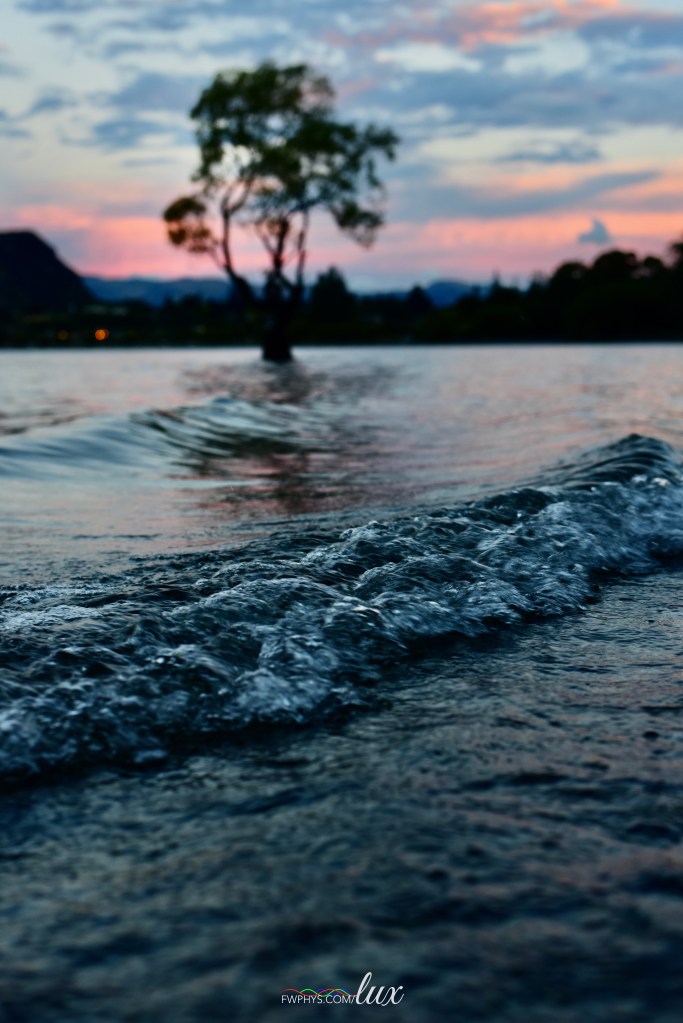
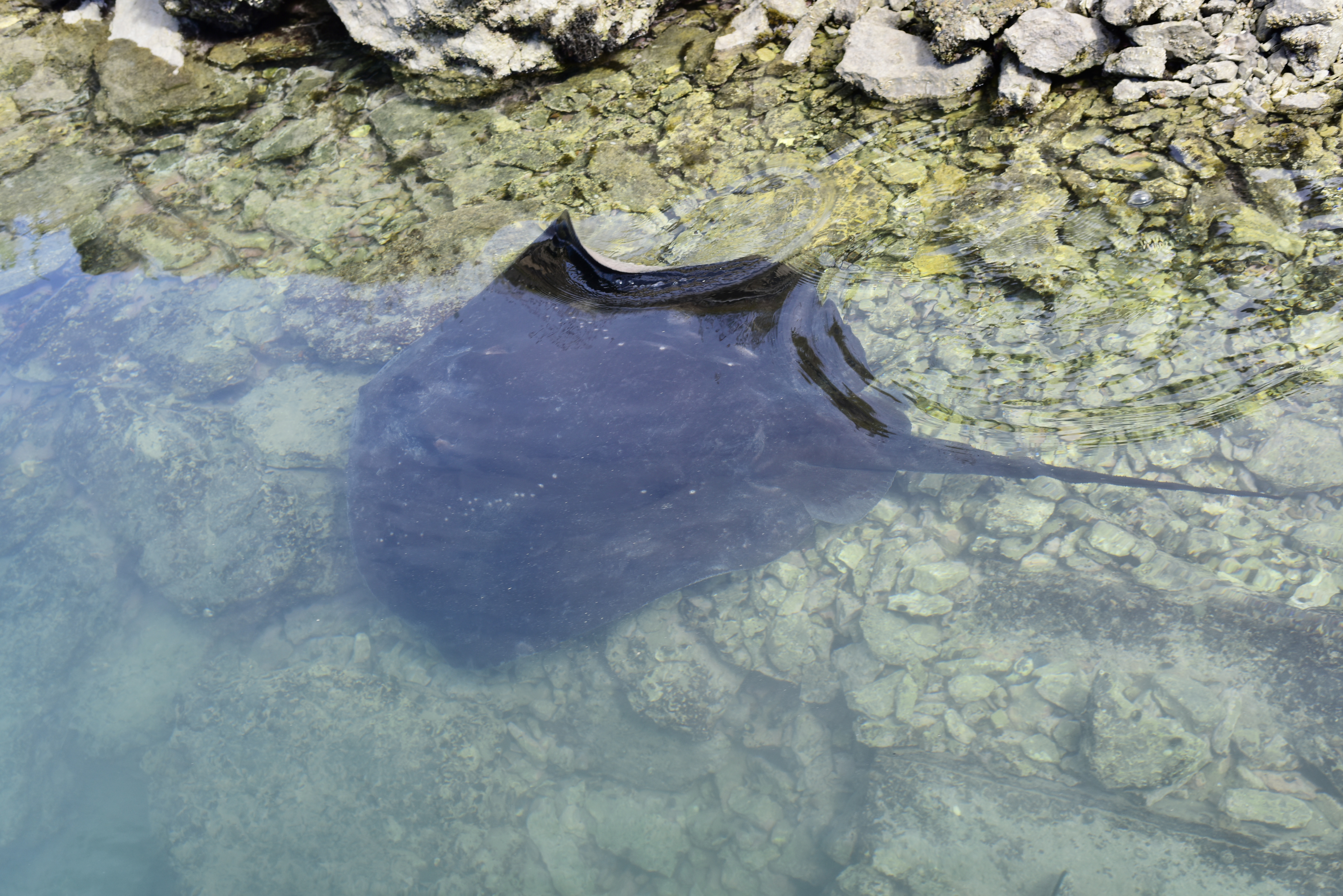
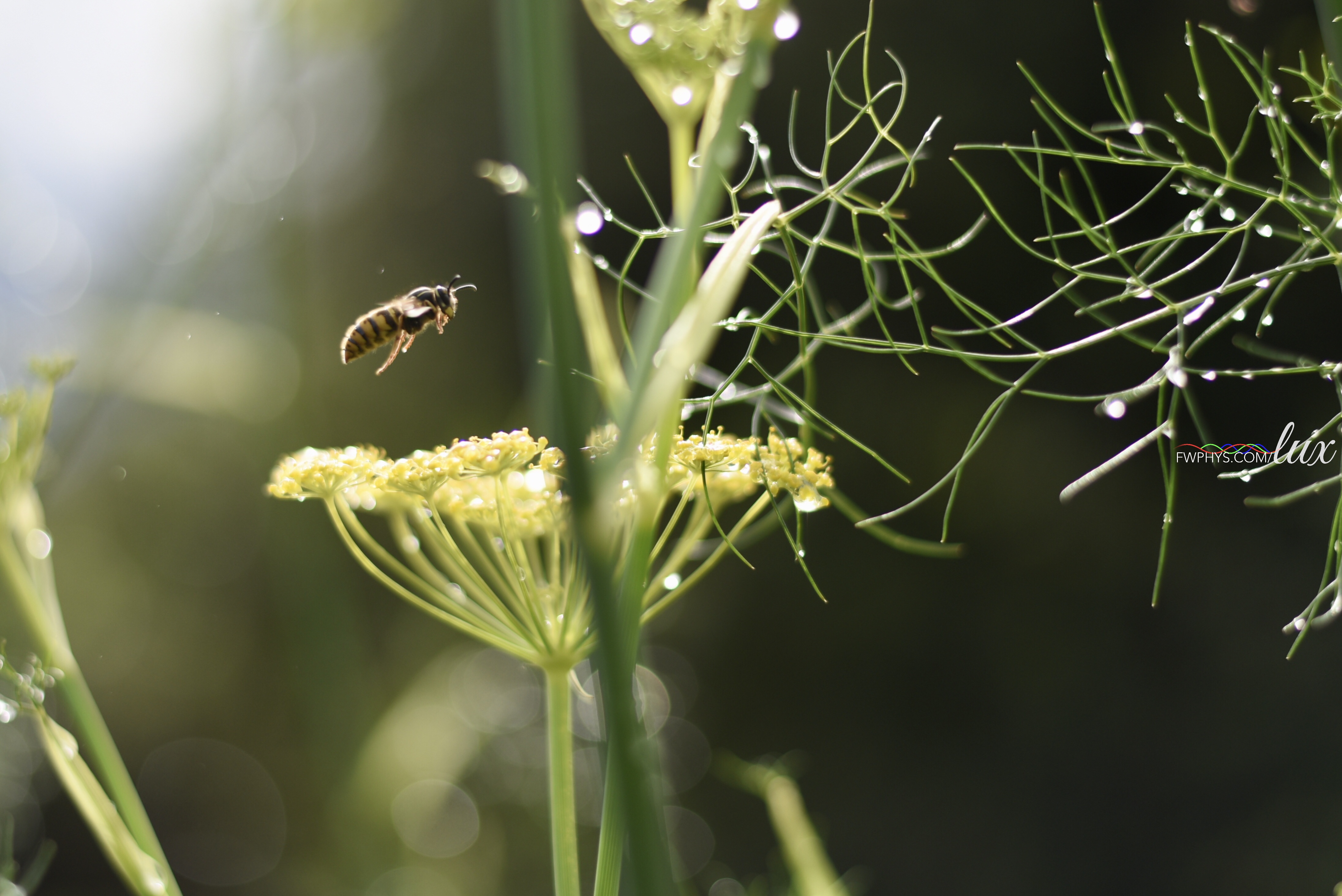
My first visit to this area was 360 days ago. Before the following becomes too much of a trite thing to say, I thought of the future quite differently back then. I’m happy with the current path via which things unfolded, of course.




 Yourong Frank Wang