In Series …
THE APERIODICALS
Local (personal, potentially shallow, and subject to change) outlooks on science, technology, growth, and occasionally culture and history. The goal is to write something every week, but whether it can make its way to FWPhys is random. Hence the series title.
Author: FranklyWrong
-
High Dimensions Navigator
(more…) -
e342 – The Zeeman Effect (Experimental Design Review)
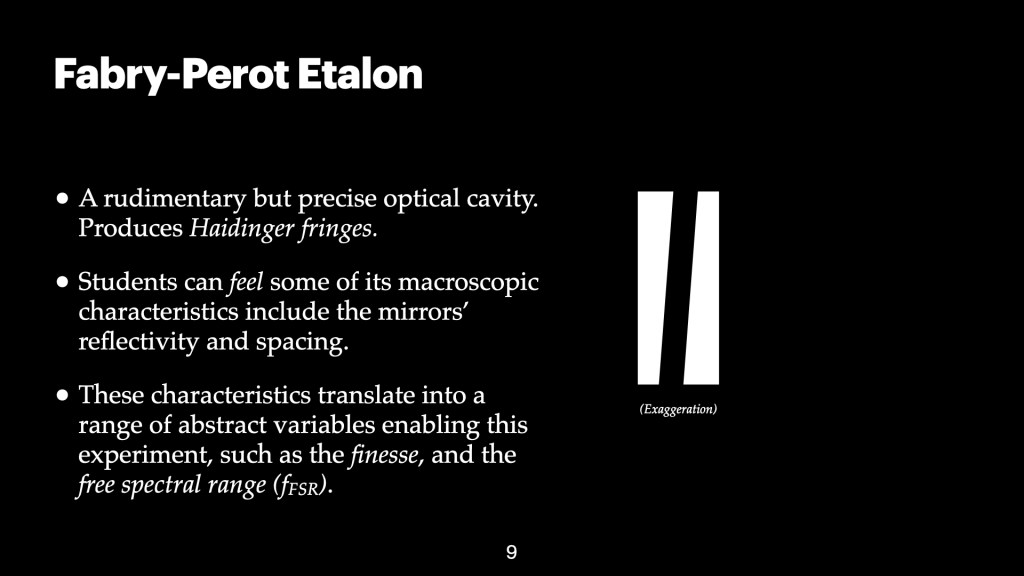
The following attachment is a review presentation that I prepared as part of my application to lead the Auckland Advanced Physics Lab next year, for which I am unsuccessful.
The inability to tell beginnings and pinnacles apart is an ever-relevant phenomenon of the human condition.
References to internal and other previliged material have been removed.







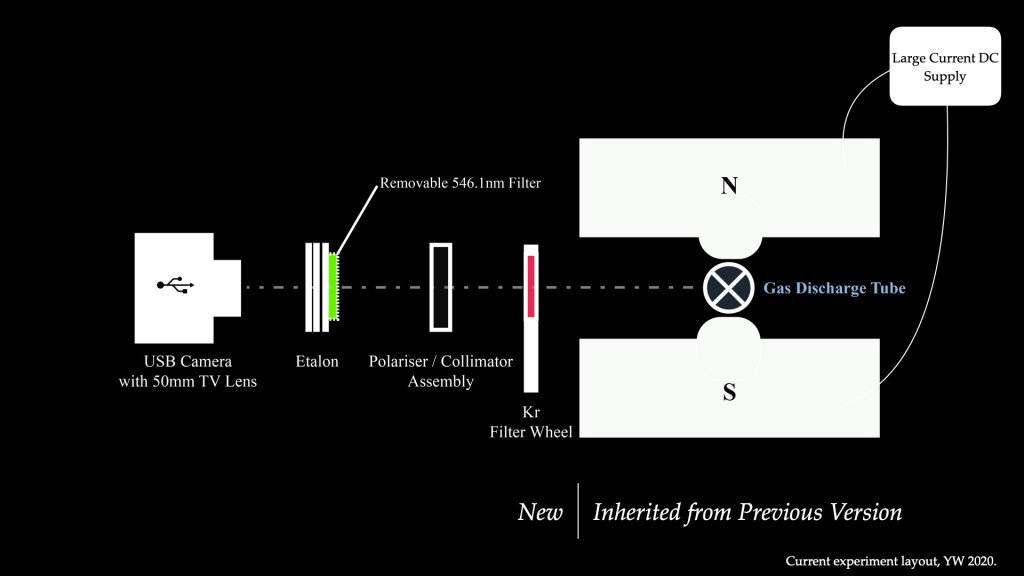


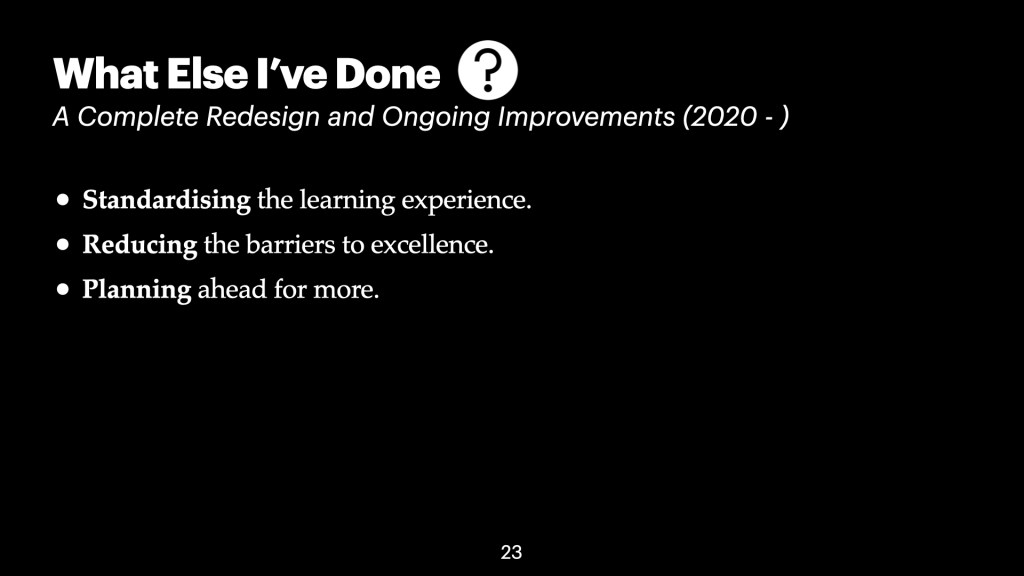
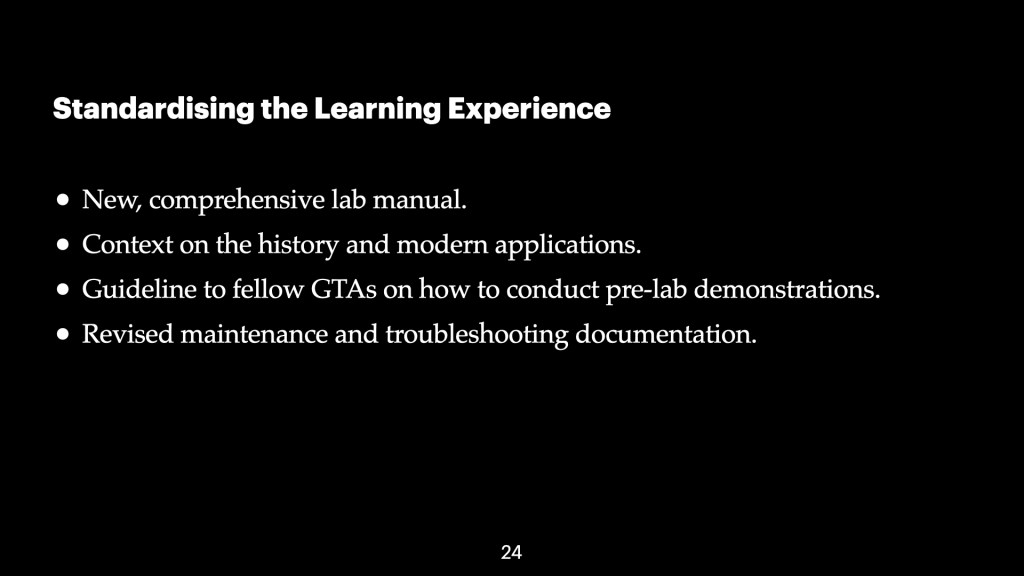


-
At Dr Sagan’s Resting Place
Finishing and publishing my diary entry about a personally significant encounter.
(more…) -
Perimeter 1-2
Waterloo included, I (re)visited many spots of importance to my career on my recent journey, and have connected with, grabbed lunch with, or otherwise disappointed, quite a few friends and colleagues in North America.
What I feel like making my next remark on — before hitting Twitter with “NEW PAPER”, and not for my signature surreal comic shock — is that few of the interactions had as much impact on my state of mind than the sight of an unclaimed baggage area at San Francisco International Airport.
After Canada, my suitcase spent some more time in YYZ (Toronto Pearson Airport) than myself. United called me to pick it up after it arrived some 25 hours later.
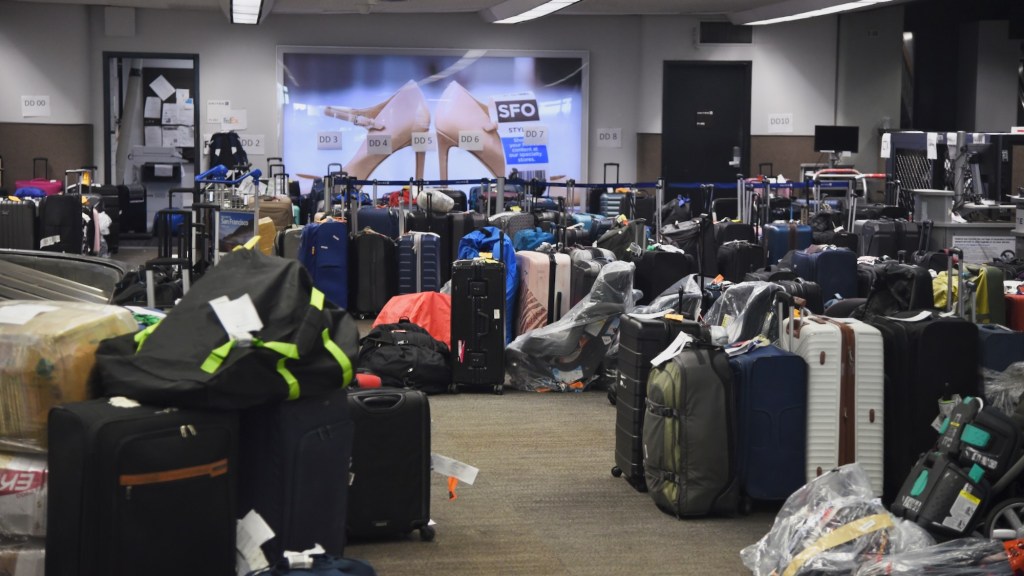
That was when I saw the size of their baggage team’s operation at SFO. Behind some cordons and curtains, the rate at which unclaimed suitcases piled up throughout the day, and the sheer number of journeys this kind of low-probability event poised to impact …
My immediate feelings and speculations elude me, other than finding it fortuitous to be hit with this on the final leg of my journey, for which I already planned some slack. Nonetheless, it kicked into motion some long threads of thoughts and self-reflection.
YYZ and SFO are both busy airports, with traffic arguably beyond easy comprehension. Soon to float up to my mind were my nebulous impressions over the years about industrial operations and risk management, stuff in the background that keeps society working even when things go wrong.
This is a much needed reminder to accept the existence of imperfections, and to work to resolve it; airline companies stay in business because they have systems and personnel in place to deal with mishaps, not despite them.
Since my undergraduate days, I would habitually shout “deal with complex systems”, or “don’t forget how big the world is”, the latter being FWPhys’s 2019 tagline. This has unfortunately stayed on the surface. I didn’t do enough.
“Taking things for granted” is a learned attitude not natural to the human condition, and I find myself described by it rather aptly. I like simplified models and isolated systems as much as the next theorist, but a recognition seemed to have escaped my vision that they aren’t everything.
Massive enough amounts of neutral hydrogen eventually start to talk — as we are now — idealistic models floating in free space can only take one so far, and, as recognized by Sagan et al, the universe has no obligation to do what we expect.
This has been as much a physics memo as it is about a change to my world view — to embrace the complexity hidden shallowly behind the mundane aspects of our lives, and to relegate some peace of mind to the occasional ignorance and chance.
Risk can be as cold as a number or as real as life and death; on this spectrum my latest experiences with it aren’t remarkable at all, except in what it taught me.
Physics is never a refuge from the messy and chaotic world that we wake up to; rather, a sound training in physics is the armor with which I stand to face the world, and perhaps change it.
More is different1,2, Watson.
P.S. It’s also 1000 days today since I last backed up my MacBook.
-
Perimeter 1-1: In the Hour Before Departure
My suitcase has returned to my desk. I took down my name on the doorplate and stored it in the inner layer of the case of my tablet. Everything is just like the evening when I arrived last month.
My visit to Perimeter was short, so short that the only environmental change I noticed was the gradual blooming of some sword lilies in Uptown Waterloo in my evening walks. Still, it was long enough. Enough to mark an inflection point on my attitude and approaches — if there’s still time to recover.
The use of words like “sanctum of physics” is not productive: it adds an artificial sense of detachment. The “sanctum” has blackboards, dining halls, reception rooms, communication rooms, and restrooms. It is built for humans, thinking. The people here also work through calculations line by line.
In the past year, my research progress has been slow, stagnant is euphemism, and it has brought about a restless and flirtatious mindset. I think this place and the people here have been excellent mirrors for me: since I have chosen a distant goal of science, there is no room for wishful thinking, that I can cheat out of challenges and endurance — that there’s anything worthy other than to put my pen to paper and work,
Marking the onset of my PhD year four
At Perimeter
-
Perimeter 1-0: Architectural Impression
My first visit to Perimeter Institute is nearing its end.
While an appreciable amount of physics and related academic thinking is to be uploaded here in the near future, I wish to start with photos of the building itself.

Pool Table 
Untitled Interior 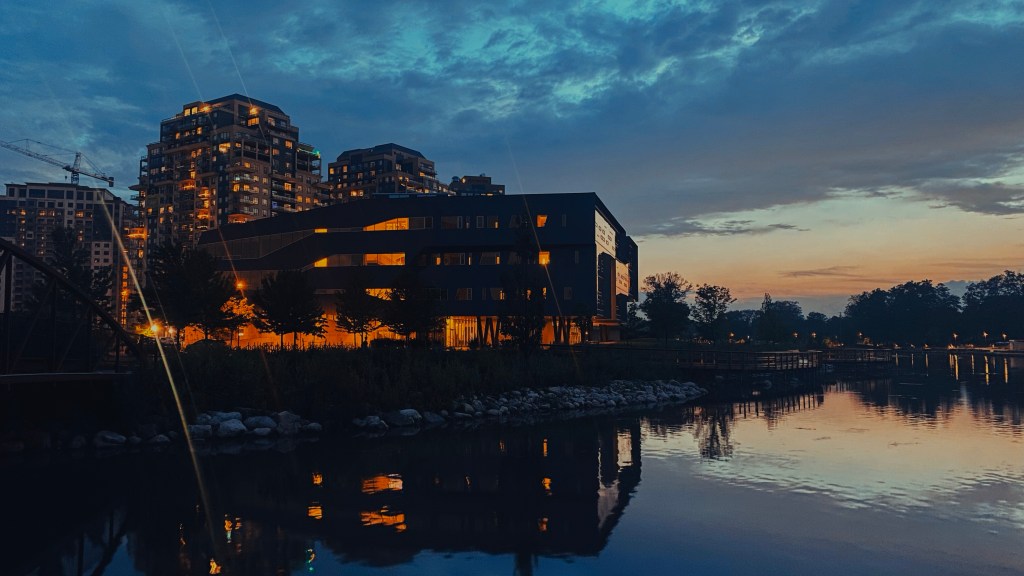
Exterior 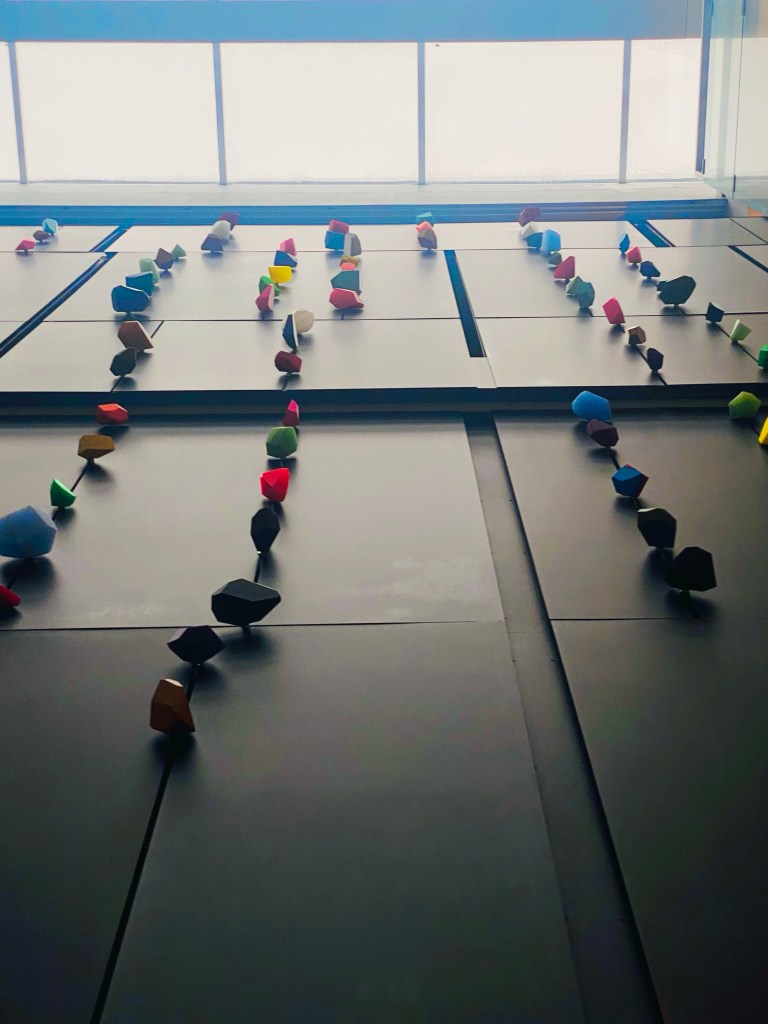
Untitled Interior 
Geese 
Alice Room 
Sky Room 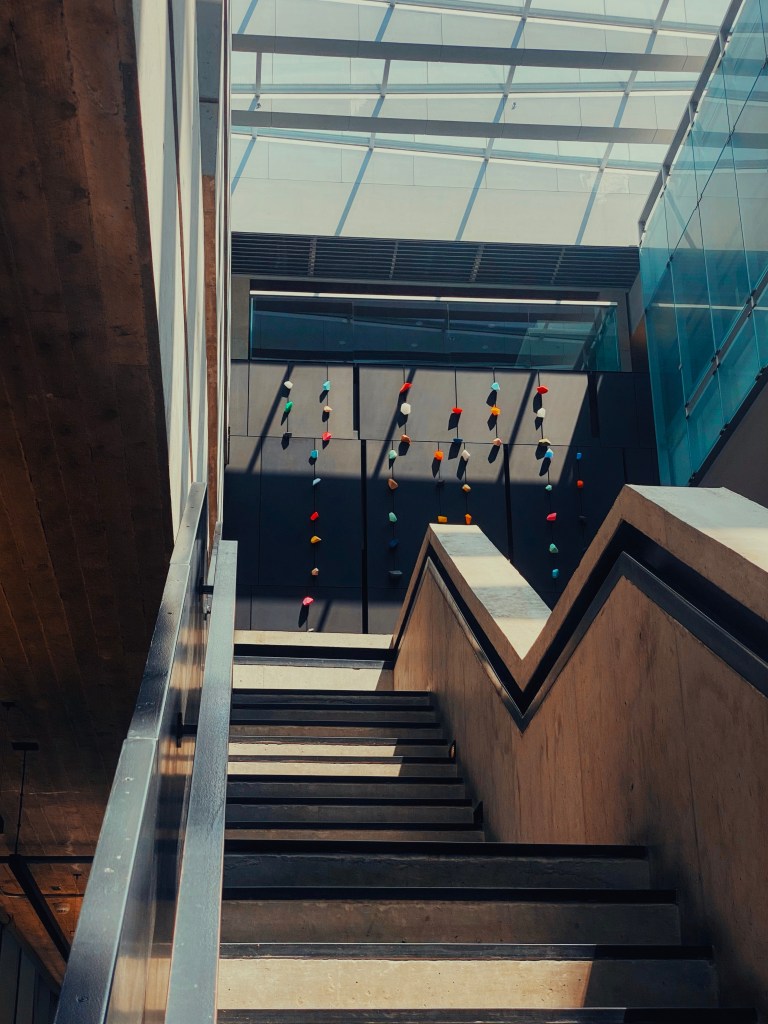
Favourite Staircase 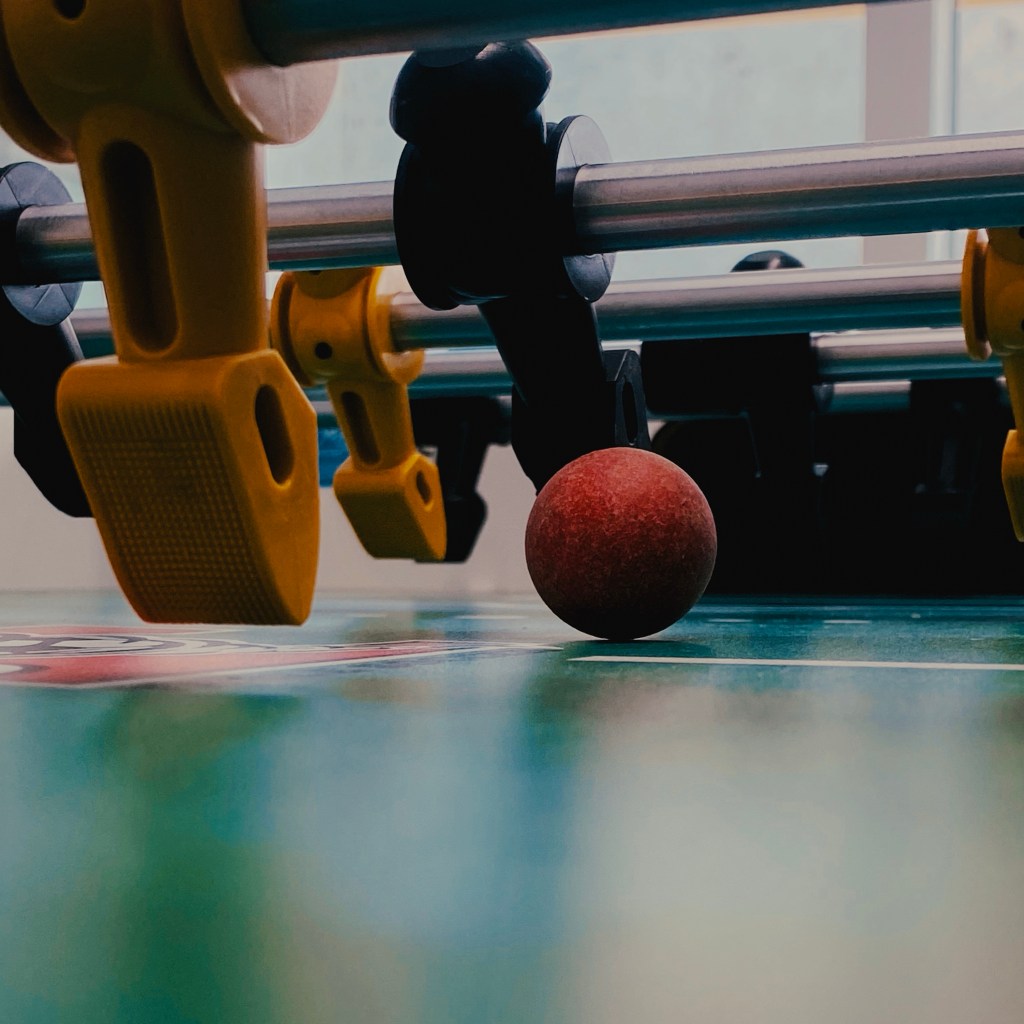
Foosball 
Polyhedral Walls 
View from Office 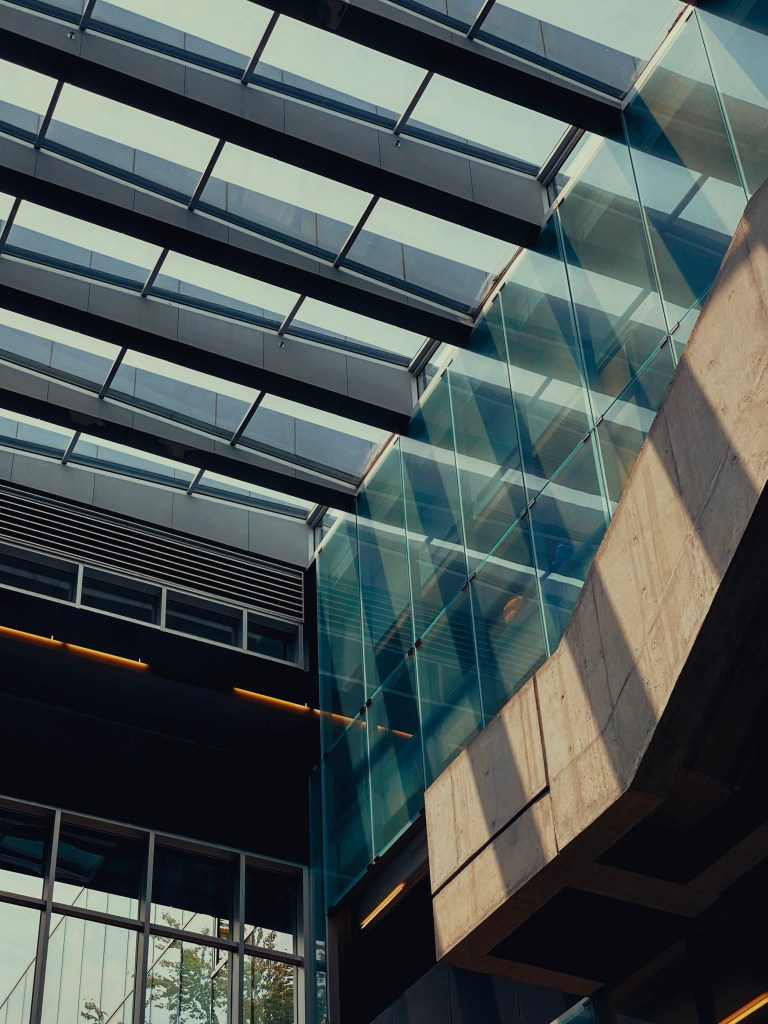
Untitled Interior View 
Sunset 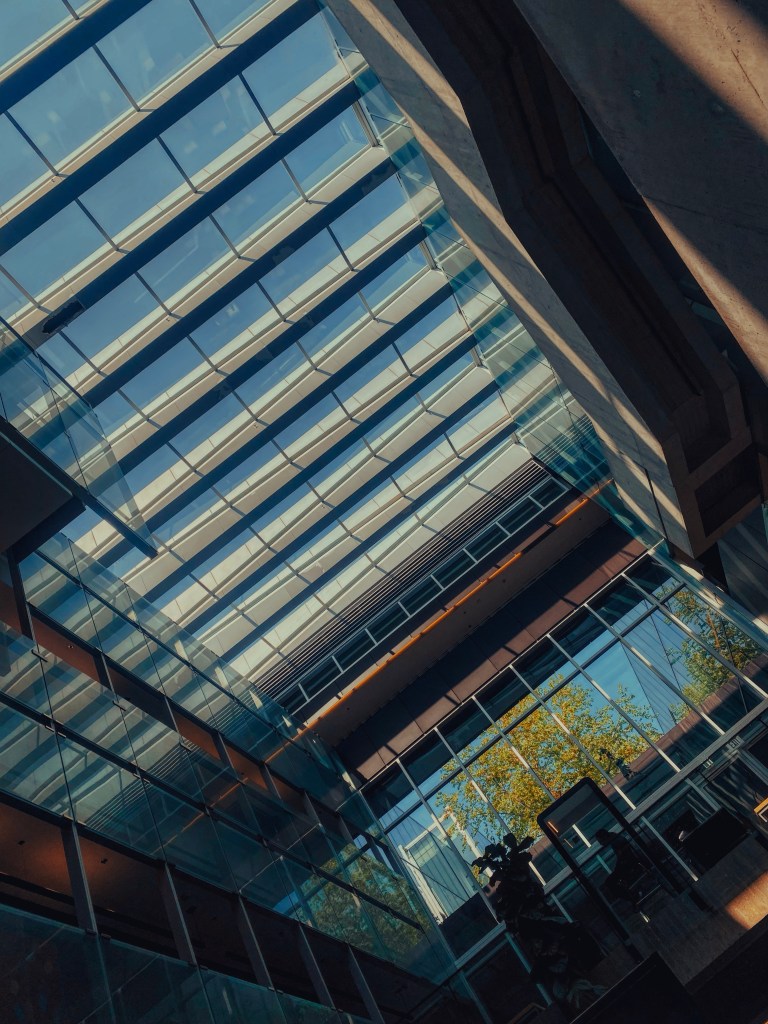
Untitled Interior View 
Afternoon Tea 
Level 4 Corridor 


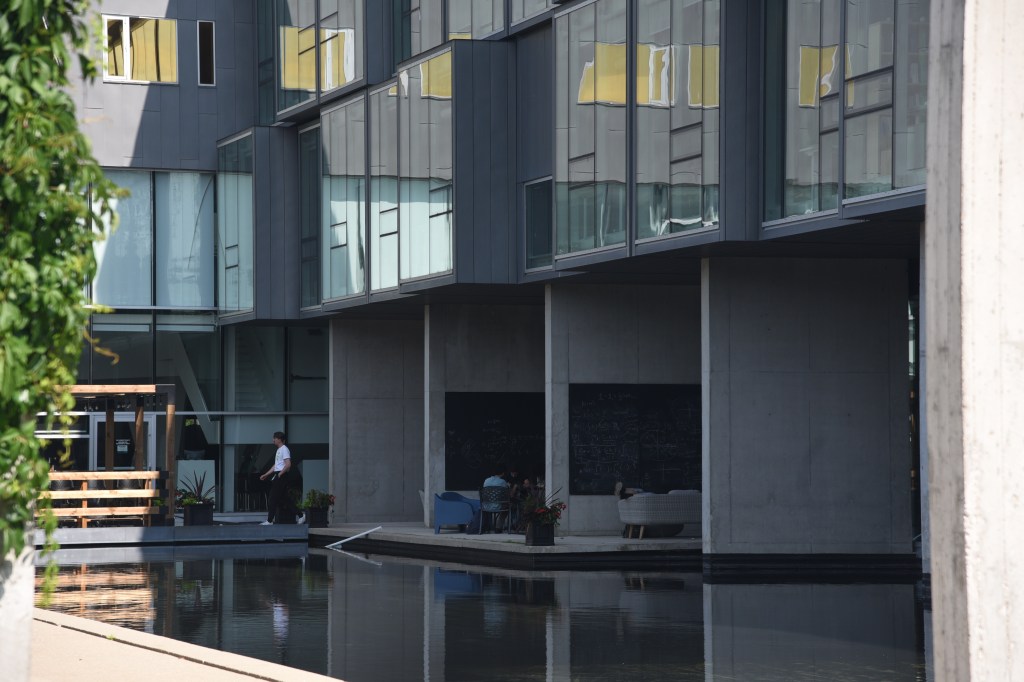


These images are intentionally empty and liminal. It’s the people and their ideas that inhabit this place that make it truly special, of course. I will work hard to join — more optimistically, stay in — their number.
Bonus: My Favourite Crying Spots

Secret door to Alice Room (Library Level 3) 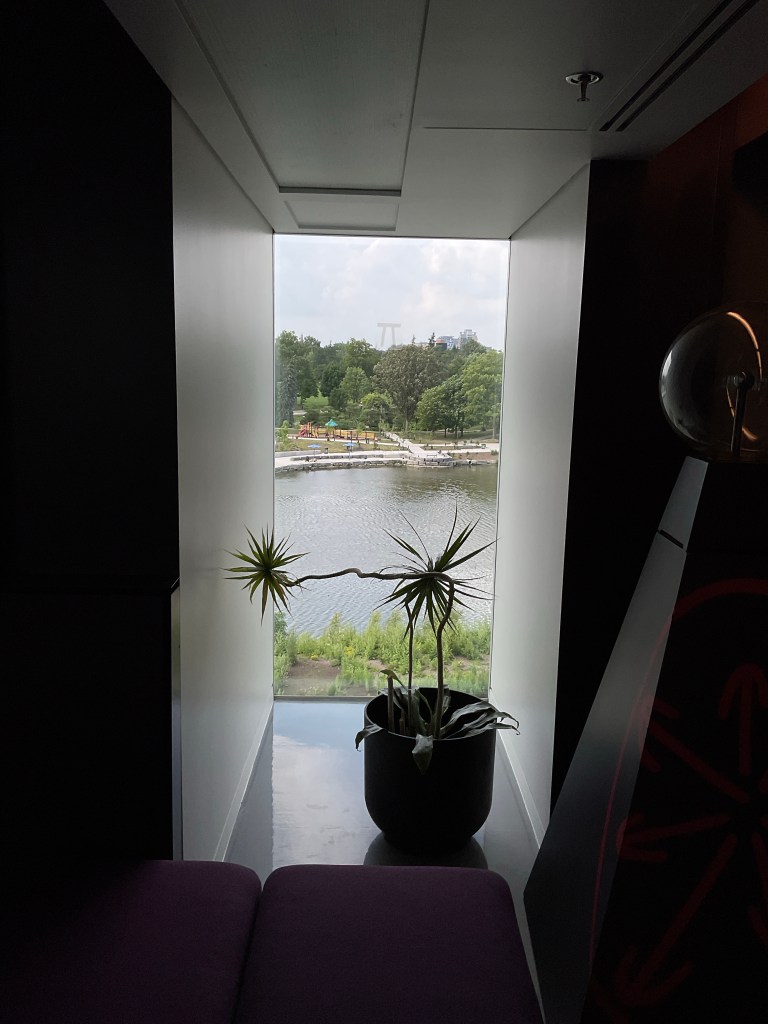
Level 4, behind this plant 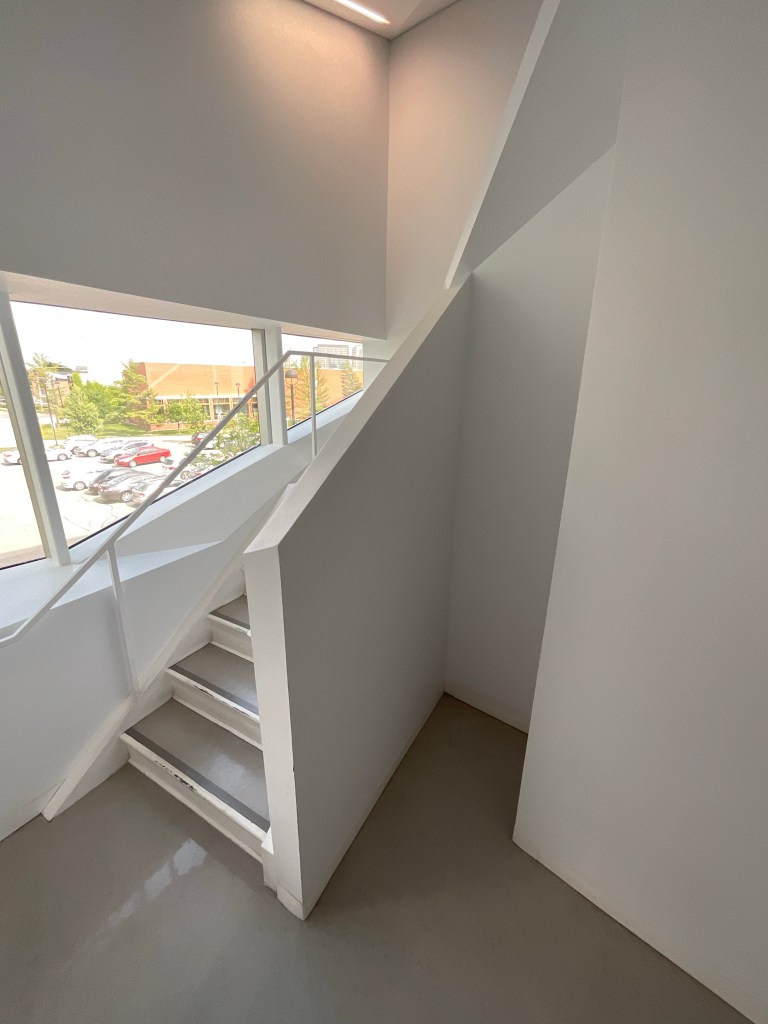
Stair 11, Level 2 
Prof. L.S.’s zen corner 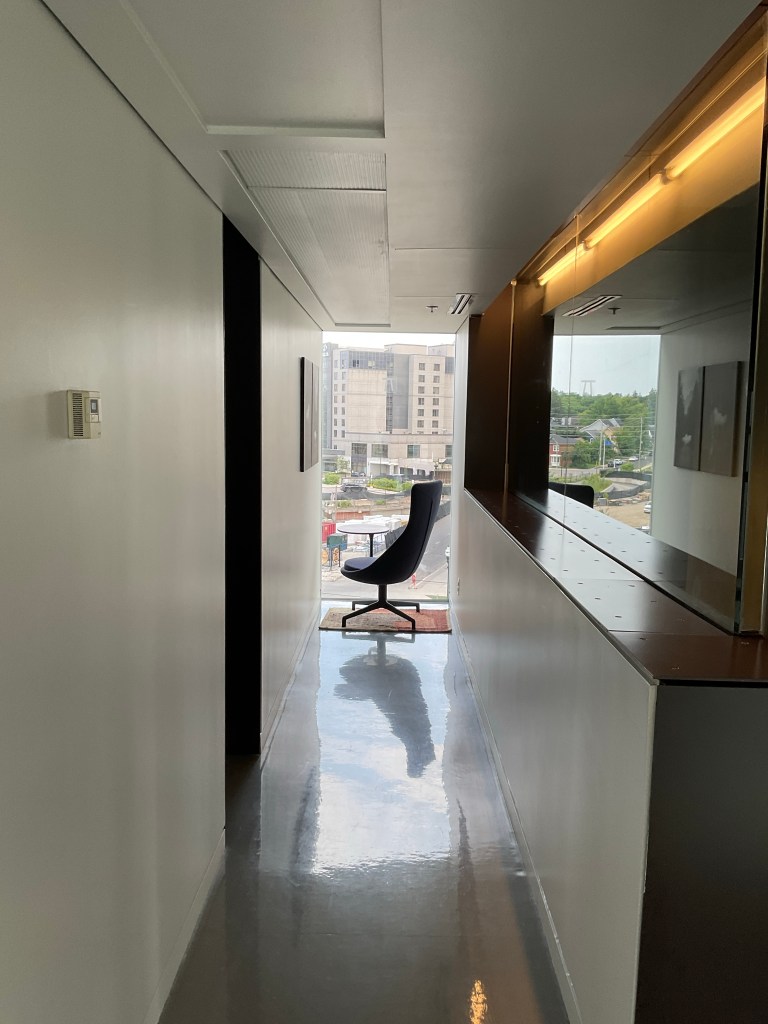
This chair 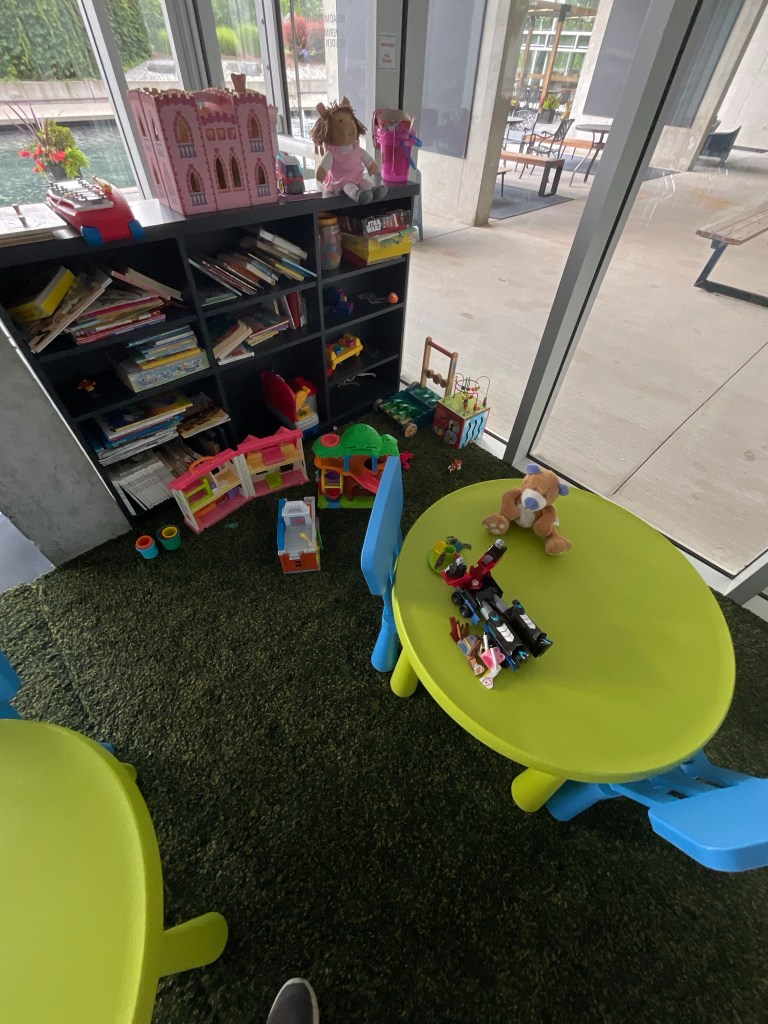
Of course 
Sunken garden – beware of the acoustic amplification -
Baristas and Elliptical Galaxies – 00
What kind of galaxies have the highest entropy?
Late at night, waiting for a hyped-up rocket launch, I stumbled upon an old attempt to calculate the entropy of my simulated dark matter ensemble while idly scrolling my old code from my first year of PhD. It wasn’t used in any published result, other than confirming that my simulation indeed had the correct arrow of time. Still, now, years later, I decided to take a leap of faith, don the dusty eyeglass of Boltzmann et al. and paint a picture of galaxies through the language of thermodynamics.
For a long time, galaxies were viewed as glittering groups of stars orbiting one another, but modern cosmology has revealed a much more profound picture. Galaxies — the glowing bits — are lively participants in a complex environment shaped by the presence of dark matter halos, and stars themselves are the result of complex physics concerning the motion and evolution of interstellar medium. The evaluation of a galaxy’s entropy is a complicated task, requiring an understanding of all relevant physical processes. I think a rigorous computation takes a PhD project, maybe several.
In this mini-series, I aim to provide an undergraduate-friendly overview of the basic thermodynamic description of gravitationally bound particle ensembles, as well as the isothermal sphere model, and some astrophysics concerning the possible life histories of elliptical galaxies. While the topic may seem daunting, I believe it is fascinating to explore the relationship between entropy and the complexity of galactic structures.
Join me as I dive into this exciting field, drawing parallels between coffee-mixing and dark matter’s role in the cosmos.
 Yourong Frank Wang