Category: memos

  • At Dr Sagan’s Resting Place

    Finishing and publishing my diary entry about a personally significant encounter.

    (more…)
  • Perimeter 1-2

    Waterloo included, I (re)visited many spots of importance to my career on my recent journey, and have connected with, grabbed lunch with, or otherwise disappointed, quite a few friends and colleagues in North America.

    What I feel like making my next remark on — before hitting Twitter with “NEW PAPER”, and not for my signature surreal comic shock — is that few of the interactions had as much impact on my state of mind than the sight of an unclaimed baggage area at San Francisco International Airport.

    After Canada, my suitcase spent some more time in YYZ (Toronto Pearson Airport) than myself. United called me to pick it up after it arrived some 25 hours later.
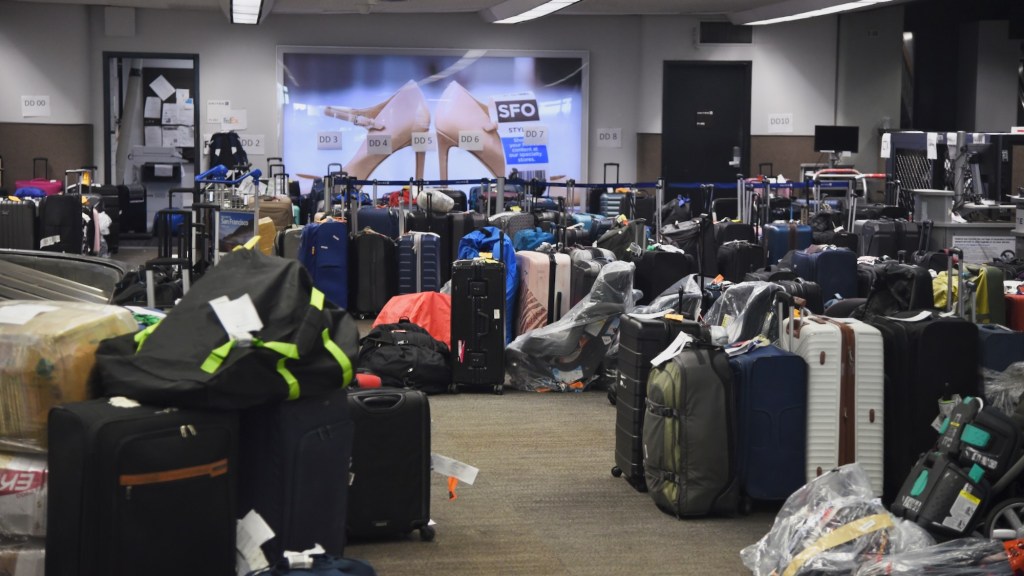

    That was when I saw the size of their baggage team’s operation at SFO. Behind some cordons and curtains, the rate at which unclaimed suitcases piled up throughout the day, and the sheer number of journeys this kind of low-probability event poised to impact …

    My immediate feelings and speculations elude me, other than finding it fortuitous to be hit with this on the final leg of my journey, for which I already planned some slack. Nonetheless, it kicked into motion some long threads of thoughts and self-reflection.

    YYZ and SFO are both busy airports, with traffic arguably beyond easy comprehension. Soon to float up to my mind were my nebulous impressions over the years about industrial operations and risk management, stuff in the background that keeps society working even when things go wrong.

    This is a much needed reminder to accept the existence of imperfections, and to work to resolve it; airline companies stay in business because they have systems and personnel in place to deal with mishaps, not despite them.

    Since my undergraduate days, I would habitually shout “deal with complex systems”, or “don’t forget how big the world is”, the latter being FWPhys’s 2019 tagline. This has unfortunately stayed on the surface. I didn’t do enough.

    “Taking things for granted” is a learned attitude not natural to the human condition, and I find myself described by it rather aptly. I like simplified models and isolated systems as much as the next theorist, but a recognition seemed to have escaped my vision that they aren’t everything.

    Massive enough amounts of neutral hydrogen eventually start to talk — as we are now — idealistic models floating in free space can only take one so far, and, as recognized by Sagan et al, the universe has no obligation to do what we expect.

    This has been as much a physics memo as it is about a change to my world view — to embrace the complexity hidden shallowly behind the mundane aspects of our lives, and to relegate some peace of mind to the occasional ignorance and chance.

    Risk can be as cold as a number or as real as life and death; on this spectrum my latest experiences with it aren’t remarkable at all, except in what it taught me.

    Physics is never a refuge from the messy and chaotic world that we wake up to; rather, a sound training in physics is the armor with which I stand to face the world, and perhaps change it.

    More is different1,2, Watson.

    P.S. It’s also 1000 days today since I last backed up my MacBook.

    1. P.W. Anderson, “More is Different”
    2. S. Strogatz et al, “50 years of ‘More Is Different’”
  • Perimeter 1-1: In the Hour Before Departure

    My suitcase has returned to my desk. I took down my name on the doorplate and stored it in the inner layer of the case of my tablet. Everything is just like the evening when I arrived last month.

    My visit to Perimeter was short, so short that the only environmental change I noticed was the gradual blooming of some sword lilies in Uptown Waterloo in my evening walks. Still, it was long enough. Enough to mark an inflection point on my attitude and approaches — if there’s still time to recover.

    The use of words like “sanctum of physics” is not productive: it adds an artificial sense of detachment. The “sanctum” has blackboards, dining halls, reception rooms, communication rooms, and restrooms. It is built for humans, thinking. The people here also work through calculations line by line.

    In the past year, my research progress has been slow, stagnant is euphemism, and it has brought about a restless and flirtatious mindset. I think this place and the people here have been excellent mirrors for me: since I have chosen a distant goal of science, there is no room for wishful thinking, that I can cheat out of challenges and endurance — that there’s anything worthy other than to put my pen to paper and work,

    Marking the onset of my PhD year four

    At Perimeter

  • Introducing FWPhys® Just Right(™ Pending)

    Are you tired of the internet jumping between light and dark modes all the time? With FWPhys Just Right (™ Pending), all content will be rendered in pleasant 0x808080 (HTML Grey) on a 0x808080 (HTML Grey) canvas, the perfect blend between black and white.

    Rolling out across all FWPhys.com content and Frank Wang’s doctoral thesis.

  • The Bob Doran Museum of Computing – Impressions

    The most incomprehensible thing about the Universe is that it is comprehensible.

    Albert Einstein
    (more…)
  • On Turning 21 (Revisited by an 24 year old)

    Forewords

    Over three years ago now, I drafted a short essay on my flight back from San Francisco. That whimsically spontaneous trip was made in the week after my 21st birthday. Back then, I was in the middle of my fourth year in my BSc physics program, and my slow transition from student to “adult” was just beginning.

    An incomplete version of the so-titled “On Turning 21” was hosted on FWPhys for a while until I’ve taken it down in the general content slimming and blog overhaul near the onset of COVID-age in early 2020. While its general messages I’d say stay somewhat relevant, I’m now at a somewhat better vantage point to re-write it with emphasis on what had worked, and what needs more attention.

    Epistemological Integrity, and Your Own Calculations

    My mind still sometimes ligers on my brief Olympiad physics course in Year 10. Back then, I didn’t know much higher mathematics beyond manipulation of trigonometric functions by rote memorization of a page of formulae, nor could I speak any of the “overpowered” languages of Lagrangian mechanics or differential calculus.

    Regrets of “what could have been” aside, I suspect the fondness with which I remember that period of my life was a sense of confused-optimism with which I approached my problems, which eventually guides my research actions today.

    It’s a mind state exclusive to one’s high school age, I’d hope: the general willingness to solve problems without regard of what’s established or optimal, and an endless drive to just try and see what works. Time is ample. Stakes are low. Naiveness fades over such self-driven explorations.

    As a student, I’m good at taking lecture notes, that I’m proud of. But during the time before homework problems and exam questions became directed efforts such as “show that”, what I did was more comparable to what I do now — just go on, and see where sense and your training takes you.

    I hope I am not talking down on the importance of directed training and systematic knowledge, no. In the context of turning 21 — on becoming an adult — what one needs to realize is that it is his or her sole responsibility to arrange the knowledge system, and, at the end of the day, carry out independent calculations reliably. I reached this point after some detours, but wish the later comers be more wary of the need of self-reliance.

    Well when brain download becomes a thing, this section will be nullified.

    Emotional Freedom, and the Weight of Spontaneity

    A general familiarity with numerical analysis — a path I’d followed since turning 21 — has opened a path littered with “Acts of Mundane Competence” for me. I’d built stuff in CAD, use 3D printers and laser cutters regularly, studied automotive bodywork in MATLAB, written songs (with computationally picked chords, of course), and produced various shorts with special effects. Some friends say I wear many hats, and I suppose it got me thinking. A critical evaluation of whether this is a beneficial development is in order, for self and for society.

    When I chose theoretical physics research as my job, I’d already taken a tacit but decisive stance to side with delayed gratification, so called “cold benches” in Chinese, as opposed to the retweet-like world built to complement and commandeer our immediate-feedback-craving nervous systems so well.

    Act of Mundane Competence is a new phrase I’d coined for myself. You might soon notice some FWPhys.com/LUX photo watermarks become LUX-AMC instead. The word “Mundane” in this context does not represent a dismissal on my end of professional knowledge and states of the art in the fields in which I dabble — my electronic music is crap and my photos, while a reliable source of income, are far from Academy levels.

    Rather, it stands for a recognition that I’m carefully reflecting on myself, after a period of immense self-empowerment and self-realization, whether I’m just drilling in the thin part of the board — whether my efforts are really best spent in such a manner, that they make me a better physicist or educator at the end of my life.

    Being adult — well, in my early twenties version of the word, somewhat independent, somewhat self-driving, somewhat self-interested, and somewhat self-sustaining — opens up much more dimensions with which one carves out his or her life trajectories, and makes it quite easy to branch up so often one stays running in circles, stagnant, and worse, getting distant with the initial motivation, assimilated by, or worse, lost in the external world.

    As such, being an adult to me is not only an exploration of the boundaries of one’s interests and limits, but also a constant process of self-evaluation and trimming of loose ends. The bedtime fantasy of adoring every corner of one’s finite life, every attempt at something new, every trip, every hobby, with numerous perfect and interesting narratives is just that, a fantasy, a shadow in the distance of the waking minutes from a dream.

    24, I’m writing this section after realizing my high-degrees of spontaneity recently brought discomfort for and potentially overwhelmed some peers I deemed important in my life, to the point I’m not realistically expecting them to see this at all — sorry. In the lingo of my previous paragraph, I signed up for a random photo gig, first in my life, of a sports event during a hiking trip; I met a player at the event; nothing happened after.

    And that’s to be accepted.

    Just Do

    I’m talking a lot.

    Both at Berkeley and at Auckland, I’m fortunate to be in the vicinity of a crowd that comprises no shortage of people shining in the startup business world. Survivor bias plays a role, but I’d also commend the startup mentality’s positive effects in one’a daily dealings.

    It’s hard to pin down what I mean here by startup mentalities. “Fake it ‘till you make it?” Meh. I think I mean the drive to deliberately and constantly learn in action, in “doing”.

    This is in general quite similar to the first point I’m making, really, that informed adults take full responsibility of their epistemological integrity — organization of skills, knowledge, and life philosophies, and ability to reliably perform nontrivial tasks on one’s own.

    But the ability to construct good looking systems on paper alone is neither efficient nor meaningful. And in my case these are only summarized in retrospect: I didn’t have these fully comprehended or even written down when I celebrated my adulthood or during BSc graduation, or (more relevantly), at the beginning of my PhD. I went on with life. I failed at some points. I reflected on them. And here I am, learning from the mistakes.

    Just do.

    Go on with life.

    We are small, time is short.

    Western Springs, Auckland

    23 July, 2022