In Series …
THE APERIODICALS
Local (personal, potentially shallow, and subject to change) outlooks on science, technology, growth, and occasionally culture and history. The goal is to write something every week, but whether it can make its way to FWPhys is random. Hence the series title.
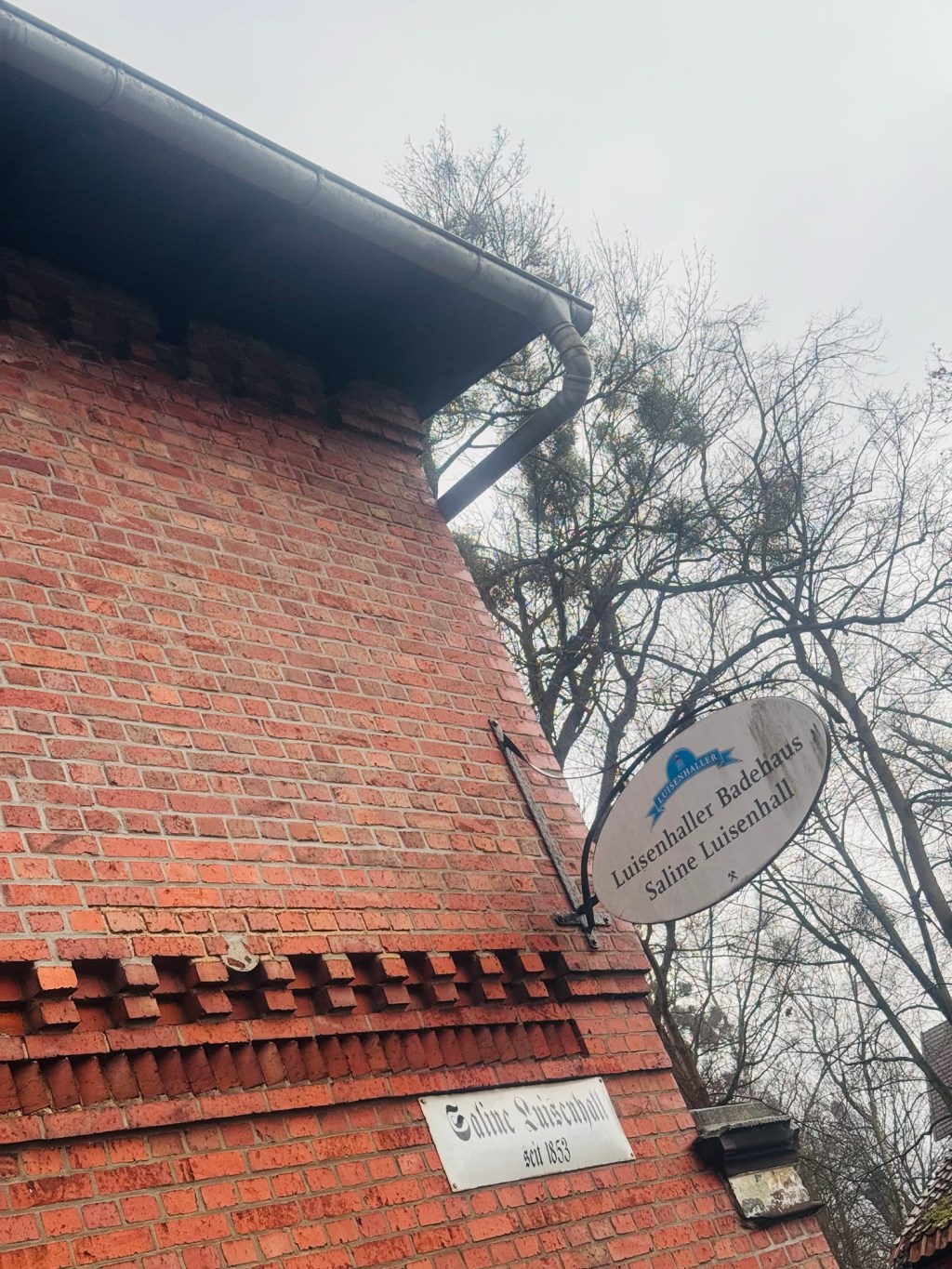
On Wednesday the university offered a guided tour of the city’s salt factory as part of an international postdoc gathering, Other than training talents for Prussia and now Germany, one of Göttingen’s main attractions back in the day was this large salt plant. I had to make sure the salt isn’t made from student tears.
I found myself stepping into a time capsule of the Industrial Revolution. The buried old railway tracks. The brick buildings, the constant humming of pumps and motors, the long chains driving what people and horses once powered — momentum frozen in time, if that expression makes sense — the building was from an era of transition, where human ingenuity had begun to mechanise labour. Science was in its infancy and engineering was an empirical science.
The factory has newly adopted a no photography policy for its inner workings due to a previous visitor’s abuse — understandable, as this is an age where inorganic minerals are sold with a best before date, what I described above might not excite the most confidence in a food product in the general public. Still, I remark that NaCl is pretty good at crystallising itself and keeping out other ions, living or otherwise, well at bay. The best before date might have something more to do with the moisture stability and the added sodium iodide. I digress.
Standing among the pipes, gears, and evaporators, I had a strong feeling of deja vu. The physical science grew up in places like this, and by extension, though I’ve never visited an industrial salt plant, so did I.
Take the concept of solubility, for instance. The process of extracting salt from underground brine depends on how much can dissolve at different temperatures and pressures. In the 19th century, workers likely relied on trial and error, informed by experience rather than precise calculations, analysing Mg and Ca impurities by taste and separating Fe salts with a giant magnet. Today, with a simple set of simulated solubility curves, I could have helped them predict the most efficient conditions for extraction and crystallisation, reducing wasted time and energy.
Or consider the 470-metre pipeline drawing brine from underground. Engineering constraints in the 1850s meant more segments, more joints, and more potential points of failure (Further, salt readily corrodes most metal formulae known to mankind). A modern understanding of metallurgy and stress analysis would have allowed for the manufacturing and installation of fewer, stronger segments—cutting costs and maintenance while improving efficiency. Of course the factory now uses a single piece plastic pipe for the brine pump. That too.
This train of thought brought me back to a larger question, one often pondered here: How does scientific knowledge empower society?
We often think of physics in terms of pen and paper theory—quantum mechanics, black holes, the fabric of the universe—but at its core, physics is about understanding and shaping the world around us. The salt mill reminded me that even the simplest insights, like how a liquid flows through a pipe, can translate into meaningful improvements in everyday life.
It also reinforced a personal conviction: that knowledge is most valuable when it serves people. In the 1850s, it might have been salt production. Today, it might be optimising simulations, designing better materials, or making technology more intuitive. The fundamental question remains the same—how can what I know help others do more with less?
 Yourong Frank Wang