
arxiv 2602.11512, in inspired finality of a project. The research is under peer review at Physical Review D.
About the Authors:
Alan Zhang is an advanced undergraduate student from the Australian National University;
Me;
J. Luna Zagorac is from the Perimeter Institute for Theoretical Physics and now at the Department of Physics & Trottier Space Institute, McGill University;
Richard Easther is from the Department of Physics, University of Auckland1.
Dark Matter
Dark matter refers to the invisible and inert (“dark”) sources of gravitation in the Universe around which structures such as galaxies form. The Standard Model of Cosmology, LCDM, successfully describes the universe’s large-scale structure and cosmic microwave background anisotropies. However, at galactic and sub-galactic scales, it faces challenges such as the cusp-core problem, the missing satellites problem, and the too-big-to-fail problem.
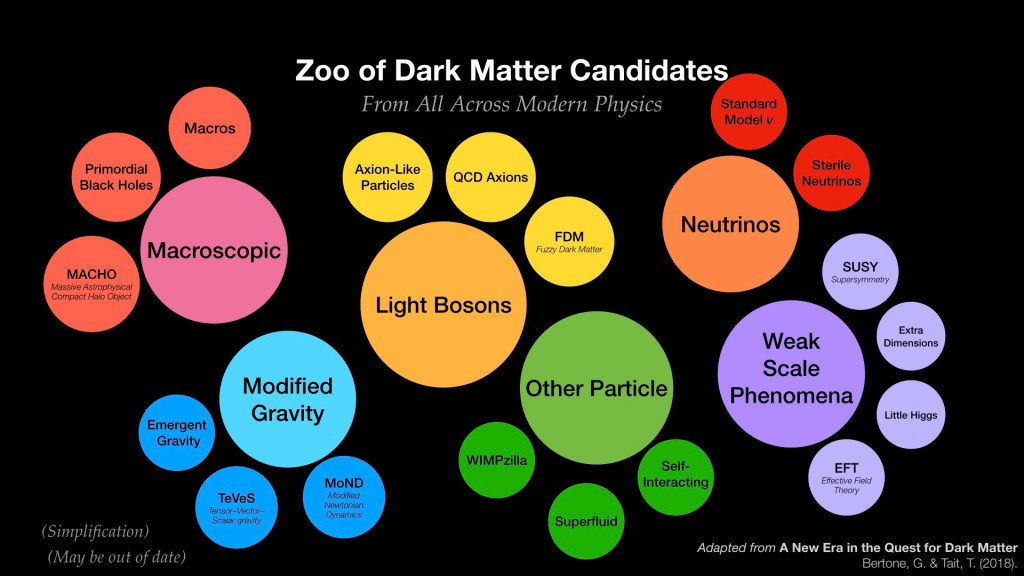
While better observational studies and more detailed modelling of feedback mechanisms, where early stars form and explode and, in the process, change how gas is distributed in galaxies, can mitigate some of these issues, alternative dark matter (DM) candidates that inherently suppress small-scale power remain areas of active investigation. Extensions to dark matter is a garden of ideas across modern theoretical physics, where scientists try to fit the missing mass in the universe into our understanding of the laws of nature.
Ultralight / Fuzzy Dark Matter
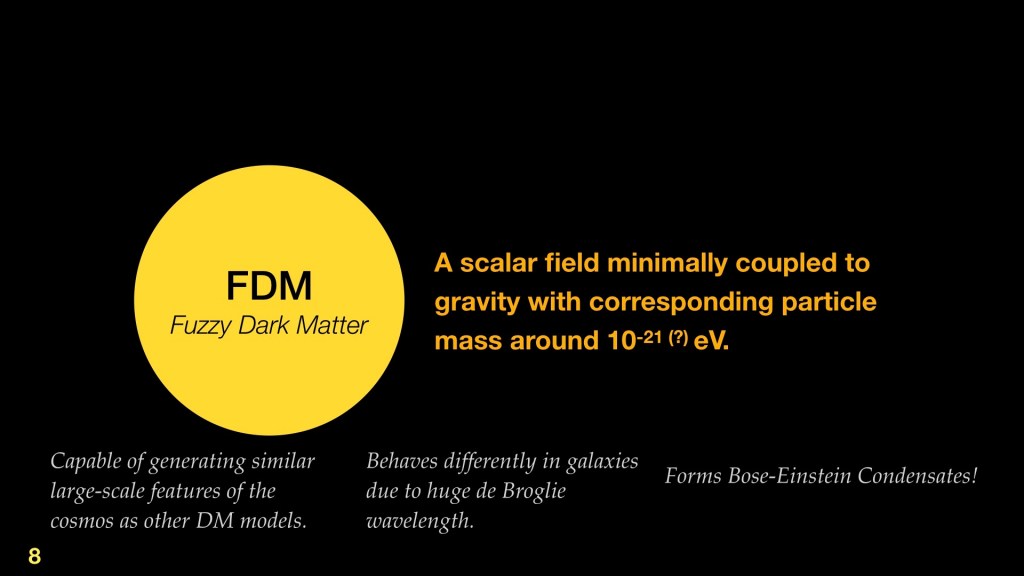
Ultralight Dark Matter (ULDM), also referred to interchangeably as Fuzzy Dark Matter, is one such alternative dark matter model. Here, we propose that DM consists of extremely light bosonic particles, in the range 10-19 ~ 10-24 eV. In ULDM cosmologies, the large scale of dark matter is consistent with LCDM, while astrophysical phenomena on the galactic scale are governed by the nonlinear Schrödiger–Poisson equation, leading to the formation of stable, self-gravitating ground-state configurations called “solitons” at the centers of collapsed halos.
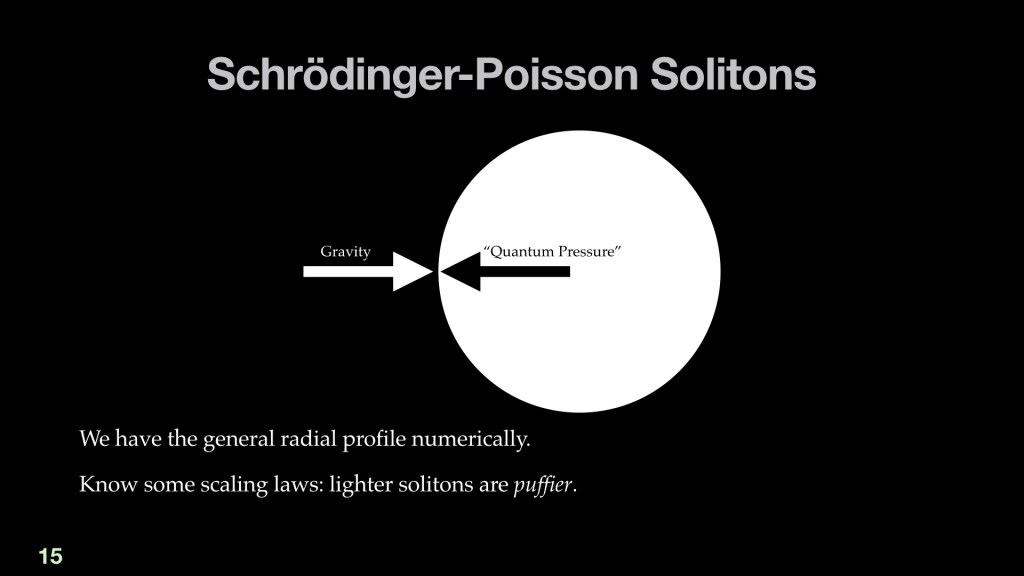
The interaction between these solitonic cores and supermassive black holes (SMBHs), which also commonly reside in galactic centers, is thus an astrophysically relevant area of study.
Stone Skipping
Like any matter, ULDM provides a source of dynamical friction. Don’t be fooled by the name, it isn’t really a contact force like friction we associate with our everyday lives — scroll on :). Dynamical friction is a net statistical effect where a massive body travelling through an interstellar medium imparts some of its momentum and energy into the medium. In the case of ULDM, think of countless small particles all doing gravitational slingshot behind you as you enter their domain, thus forming an overdensity behind you and generate a gravitational pull opposite your direction of travel.
In earlier work, for a point mass shot through an initially uniform block of ULDM, we have successfully matched simulated dynamical friction evolution to calculation results using first-principle quantum mechanics. When it is a point mass shot through a soliton, like an SMBH heading into another galaxy’s core during a merger event, for example, things were much more nuanced.
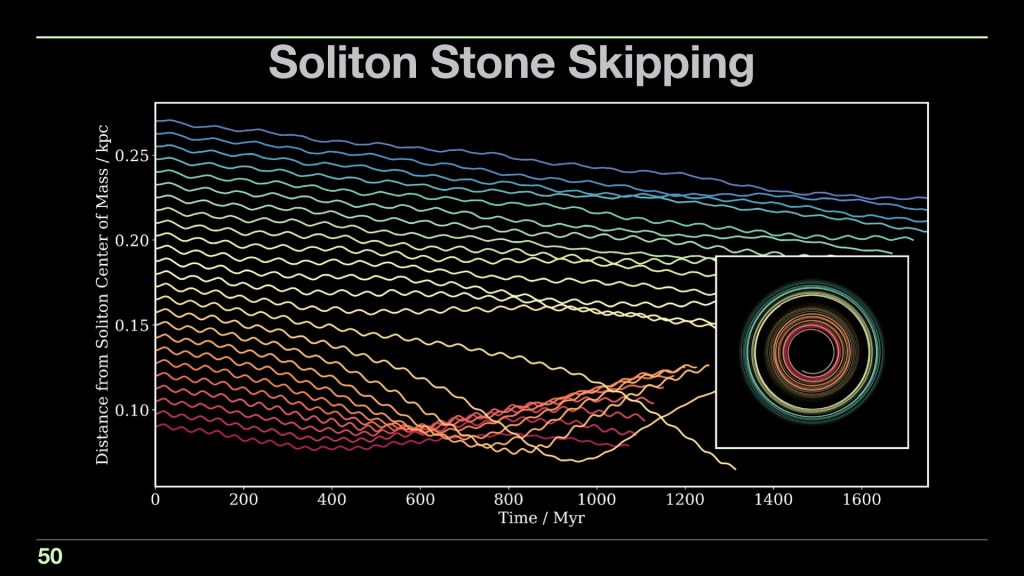
Instead of purely generating a gravitational wake behind its travel, the orbit of the point mass can actually excite quasi-normal modes in the soliton and cause some global oscillations of structure. Therefore, instead of purely losing kinetic energy into the soliton, it sometimes can get ejected — like a stone skipping off the surface of water given appropriate angles, speeds, and stone …
In technical terms, the wave-mechanical nature of the medium introduces novel effects. This phenomenon complicates the understanding of SMBH binary evolution, which is relevant to the “final parsec problem” (where binaries stall before gravitational wave radiation becomes an efficient channel to lose energy) and gravitational wave observations by instruments like pulsar timing arrays (PTAs) and LISA.
Our work at hand aims to elucidate the detailed dynamics and the specific physical mechanism underlying stone skipping.
This Work In Brief
We set out to understand exactly what caused black hole stone skipping and it turns out that it will only happen when the dark matter density field has a dipole term – or a component that resembles a spinning oval. And we find that a dipole is generated by a single black hole, but not by an orbiting pair of them – at least when they are both about the same size.
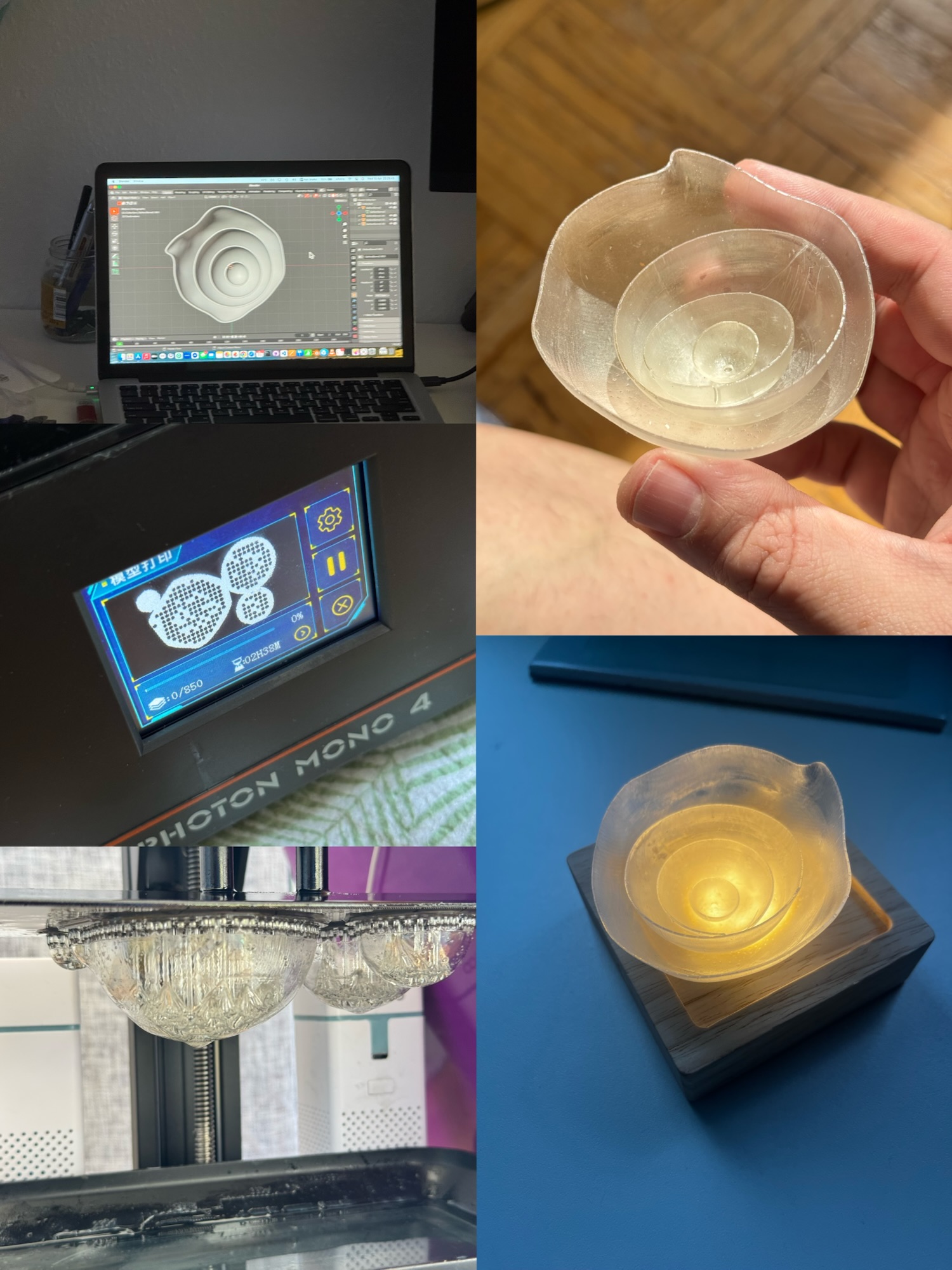
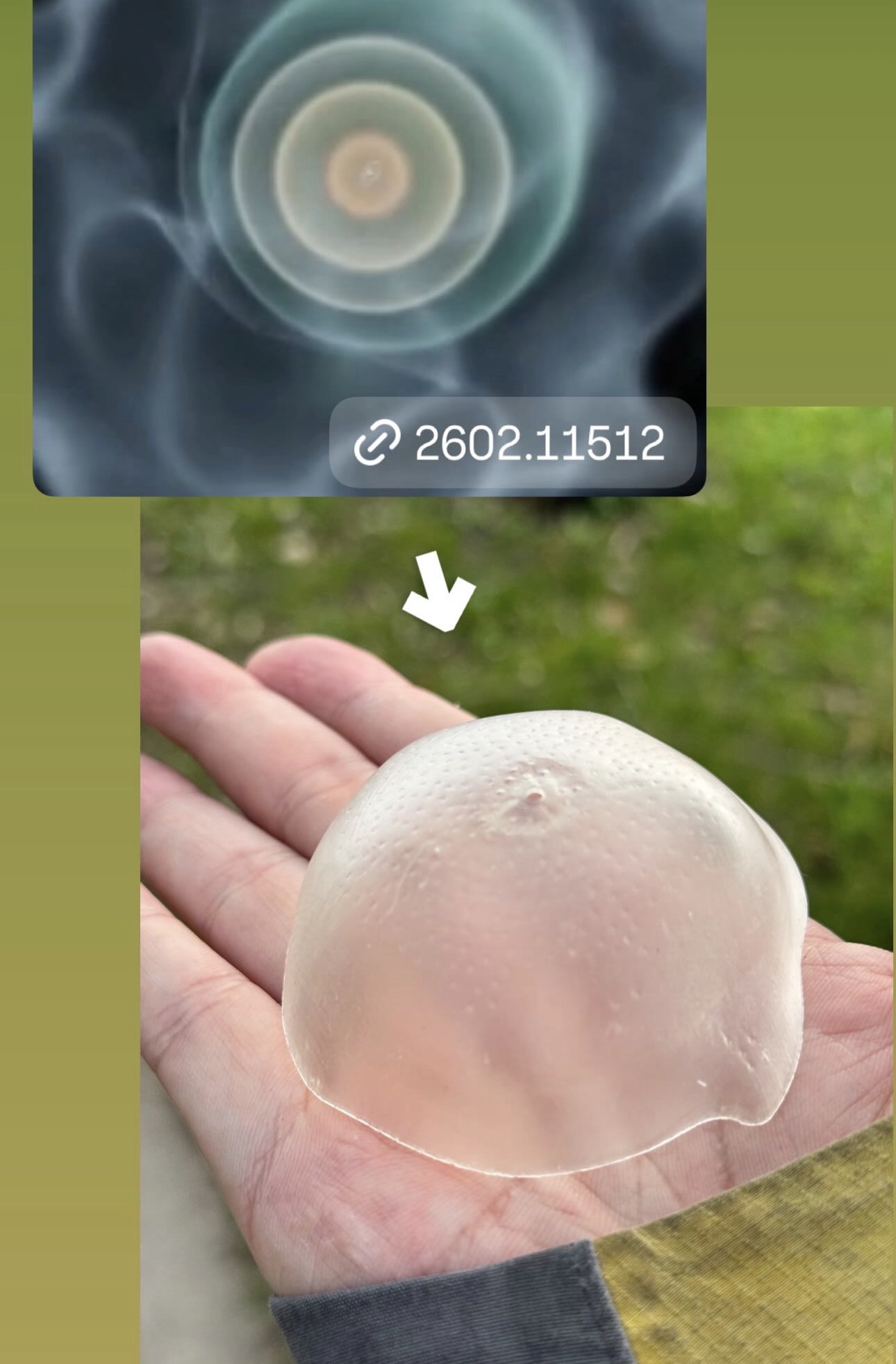
[April 2026 Edit] Stirred Soliton Night Lamp
I used a marching cubes algorithm to physically find the coordinates of 4 equi-density surfaces in an excited soliton, and baked them to mesh. A prototype has been 3D printed and I am learning how to work with clear-resin to maximise the visual coherence of this object.
This Work In Detail
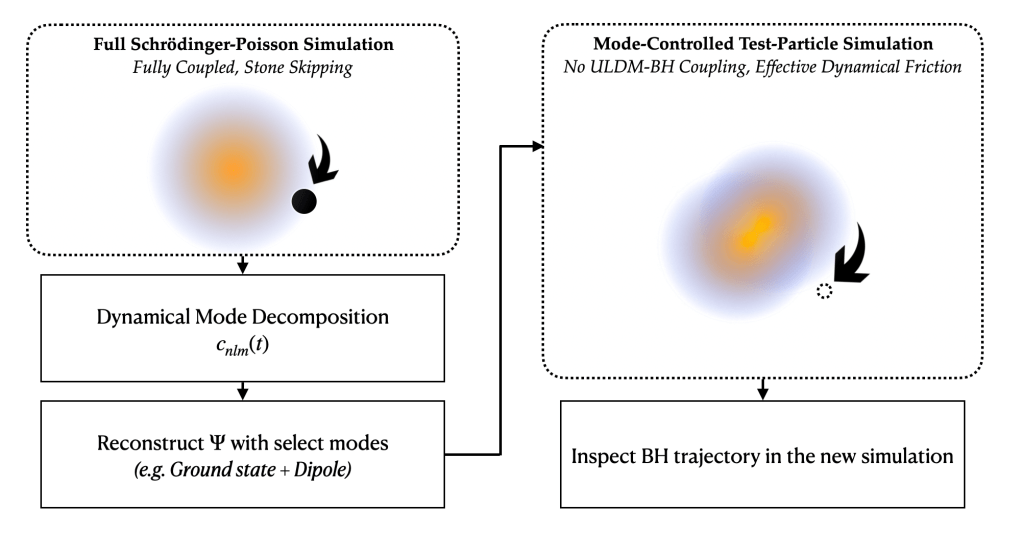
Simulations were performed using our PyUltraLight 2 and we couple a black hole to a soliton gravitationally. Parameters were set for the ULDM particle mass 10-21 eV and soliton weighing 12 million solar masses, corresponding to a soliton radius of about 200 parsecs, fitting for a small galaxy. Black holes were initialized in circular orbits at a radius that is comfortably within the soliton, 140 parsecs.
To isolate the effects of soliton excitations, a control run was designed where the black hole was treated as a test particle (no backreaction) orbiting in a pre-excited soliton background. An empirical drag force, adapted from approximate expressions for ULDM dynamical friction, was included in the black hole’s equation of motion. This allowed for controlled studies where specific vibration modes of the soliton were artificially excited.
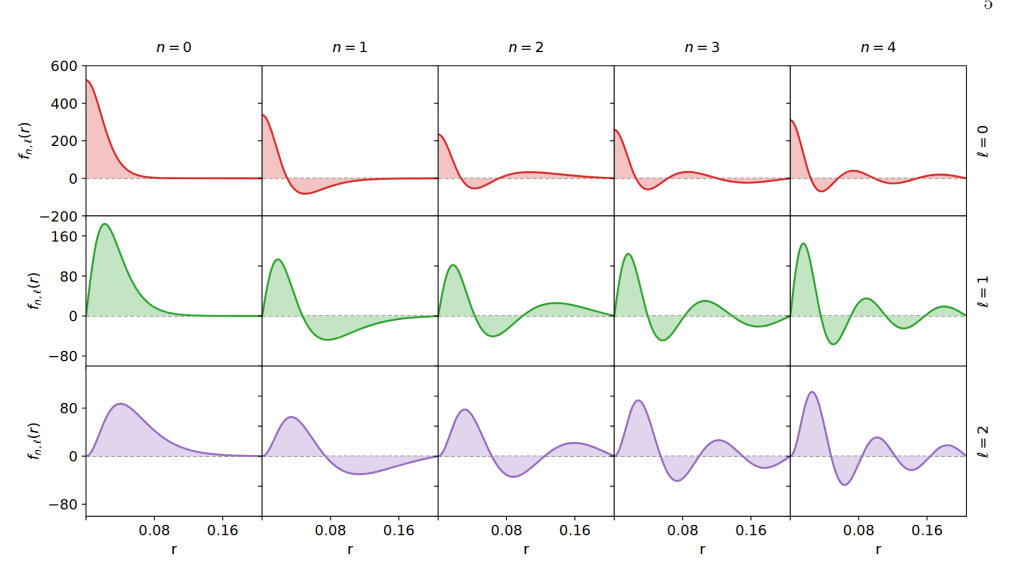
We then performed Eigenmode Decomposition. The elegant framework was described in Luna Zagorac and co.’s paper Schroedinger-Poisson Solitons: Perturbation Theory. The ULDM wave function was expanded in terms of the orthonormal eigenstates of the unperturbed, ground-state soliton Hamiltonian. These eigenstates are characterized by quantum numbers (n, l, m) corresponding to radial, angular momentum, and azimuthal components, respectively. We focused our attention on monopole (l=0), dipole (l=1), and quadrupole (l=2) components.
To verify the role of specific modes, initial ULDM wave functions were constructed by superimposing the ground-state soliton with selected excited eigenmodes. Black hole trajectories were subsequently simulated in these mode-filtered backgrounds using the test particle approach.
Overall, this research provides a fundamental understanding of a unique dynamical phenomenon in ULDM, challenging conventional assumptions about dark matter interactions and offering new perspectives on SMBH evolution and gravitational wave source modeling.
Additional Code (by Alan Zhang)
https://github.com/Ailun-Zhang/ULDM-Eigenmode-Toolkit
https://github.com/Ailun-Zhang/PyUL_SK
- whose office door I knocked on a fewTM times when the first stone skipping runs survived my exhaustive tests to rule out it was numerical noise … ↩︎

