Yesterday at sunset, half of Göttingen (and reportedly as far as Berlin) looked up to witness a rare atmospheric phenomenon.
While I have yet to consult my professional peers about its exact cause, my guess is that at a certain altitude, the air was still enough to be supercritically cooled below freezing, leading to the formation of persistent contrails behind commercial airliners.
After the sun had set, I brought my tripod and took a bus to the field between Geismar and Kiessee. Under the light of a setting crescent moon, with the city lights dotting the eastern hills, I tried to capture the night sky at its most intricate.
The sky—huh. My website is mostly about the sky, fitting for someone whose day job is that of an astrophilic physicist. The sky was my first screen. Perhaps that’s why Apple’s iOS 7 redesign resonated with me like nothing before or after—its appreciation of sky colors, from sunset gradients to an aurora-infused star field, felt deeply familiar. I liked browsing the sky as if it were a screen, knowing that from centimetres above to megaparsecs beyond, something was always happening.
One of my least favorite modern terms on the Chinese internet is chūpiàn (literally “(good for) producing photos”) to describe a place or a scene.
As a photographer, I see every photograph as the result of countless factors converging. As I’ve said before, packaging life experiences into standardized, mass-produced content for quick consumption is something I find unacceptable. To create and share a work solely for the fleeting impression of “looking good” is disrespectful—both to oneself and to the audience.
Perhaps because I’ve been decorating my new home, I am learning to see modern aesthetics from another perspective. The ultimate alienation of aesthetics occurs when the physical world is reduced to a digital one—a phone screen. It is smooth, without texture, and highly ephemeral—you glance at it, find it beautiful, but you don’t linger, because deep down, you know it doesn’t exist.
Have you ever seen a phone screen in your dreams?



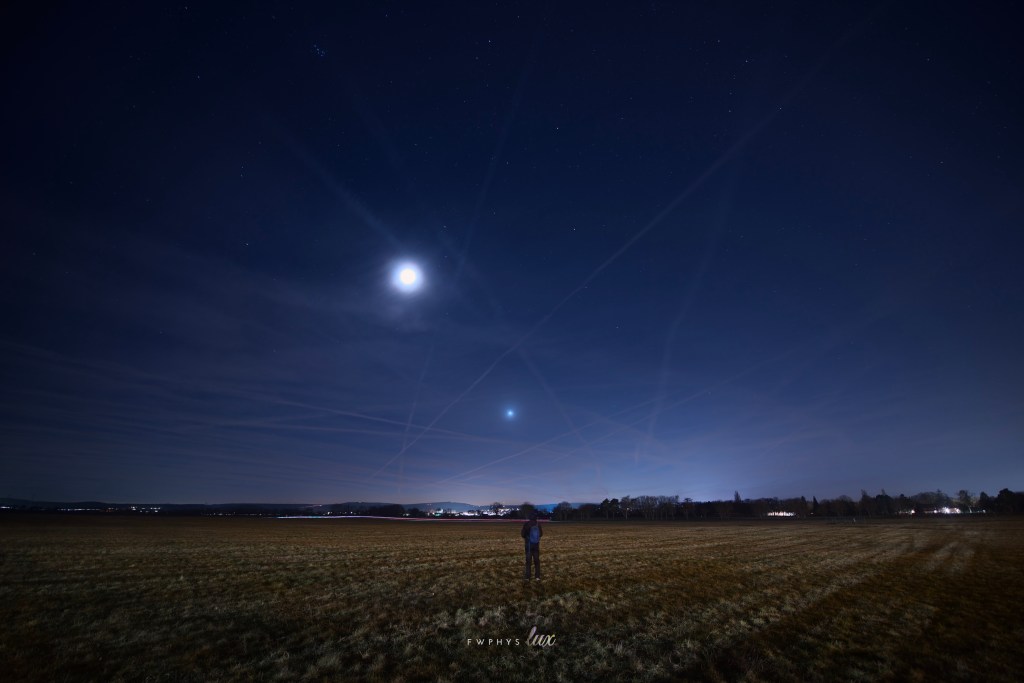



This post also debuts an experimental version of the new LUX Watermark. This is one important step in our typographical shift from Avenir Next to Josefin Sans.

 Yourong Frank Wang