Author: FranklyWrong

  • Our Unforeseen Consequences

    In Series …
    THE APERIODICALS
    Local (personal, potentially shallow, and subject to change) outlooks on science, technology, growth, and occasionally culture and history. The goal is to write something every week, but whether it can make its way to FWPhys is random. Hence the series title.

    A few months ago, when I was preparing to demonstrate one of our few physics experiments that deal with radioactive sources — Co-60, for our use case, a good source of gamma rays and electron-positron pairs — I remember reading about the concept of low-background steel, the magical metal they required to build the radioactive castle and all our Geiger counters.

    The term “Low Background” is one of the more interesting technical terms. It does not generally refer to a particular manufacturing technology, not a certain grade of chemical resilience, nor some special mechanical performance. Rather, it refers to a priceless quality, a timestamp on their manufacturing time: before humanity’s first nuclear tests.

    From mid-19th century, humanity has been reliant on atmospheric gases to lower the carbon level in molten iron alloys, a crucial step in steel manufacturing. With the successful nuclear tests starting in the 1940s, especially when the Americans thought detonating nuclear bombs mid-air or next to an island nation were good ideas, a huge amount of radioactive byproducts have remained in atmospheric circulation ever since, some naturally find their way into our metals, and back to ourselves.

    “High Background” steel manufactured afterwards of course isn’t worthless. Other than precision scientific and healthcare scenarios, they are around in abundance, supporting every bit of modern life.

    What I do wish to remark, with decades of hindsight and speculative wisdom, is that the “background” distinction was an unforeseen consequence. To me, there is a general lack of evidence that Americans in the 1940s, or anybody else, stockpiled steel with foresight of this particular kind of threat, only realizing the lasting impacts of those free nucleotides after our geiger counters malfunctioned or photographic films exposed to random dots.

    This one little example actually marks the end of my essay this week.

    Whether I am insinuating that I feel concerned about what has transpired recently in the Northern Pacific, is up to your own comprehension. I have zero knowledge about real-world nuclear fallouts or power plant failure management, and understand that my opinion, if any, can effect little change in a world where “being transparent” earns oneself more praise than actually doing anything.

    That something is logical but unforeseen usually leads to the painful realization that humanity has little chance to do anything about it when it arrives, even if it is we who set it in motion. What are our generation’s unforeseen consequences? I am actually quite keen to know.

    Footnotes

    I am not to imply that nature before the nuclear age was particularly bucolic — the radioactive isotopes in all the metal forests humans inhabit come from more places than the steel. Radon, for example, mostly come from the radioactive decays within the earth itself. Potassium has an abundant radioactive cousin, K-40, let alone the lighter ones such as C-14 and H-3 that are replenished by a diverse range of natural processes.

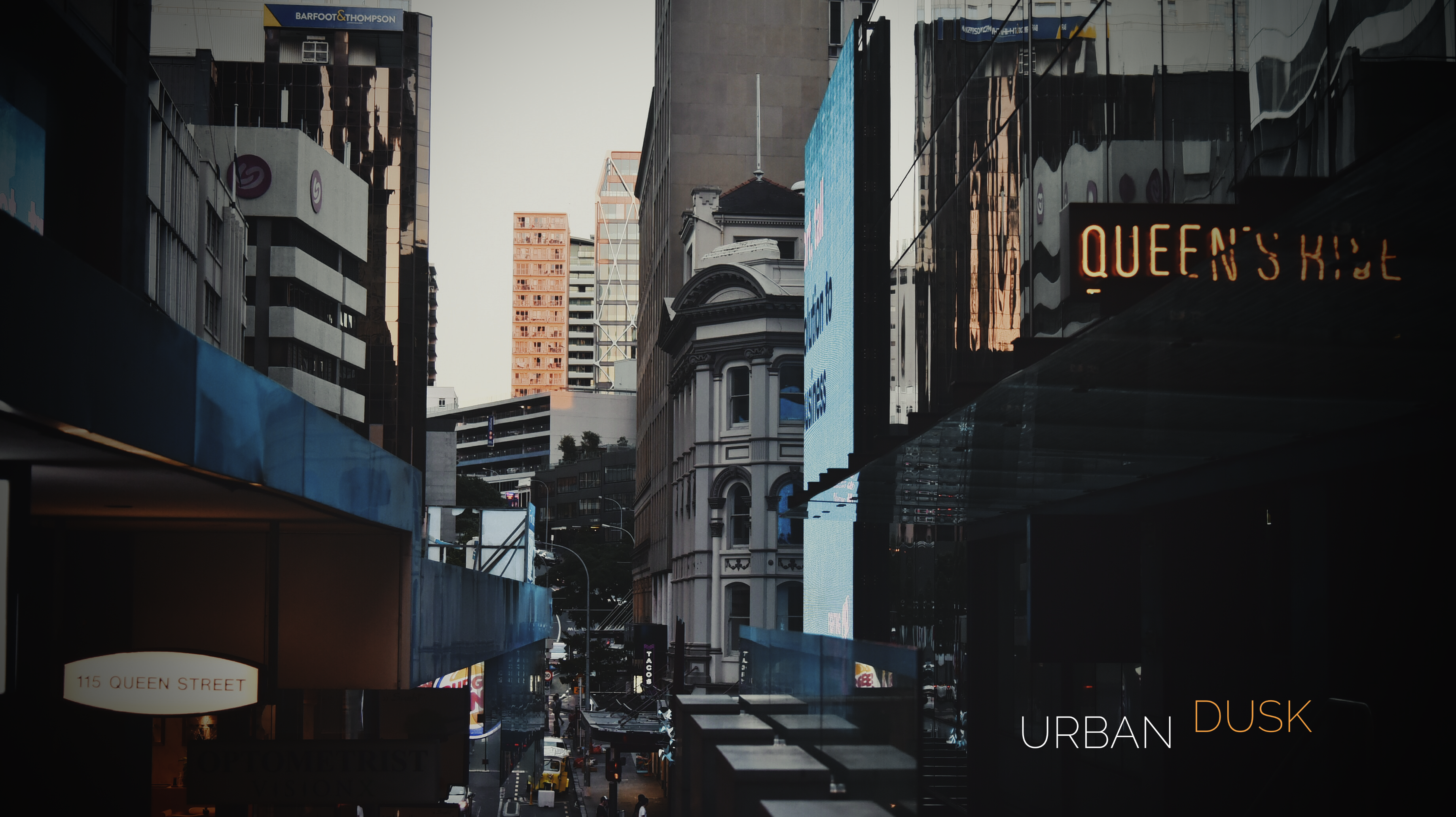
  • [Lux] A Cinematic Color Experimentation

    I know, I know. Being cinematic is much more than cutting your full-frame photos into widescreen. Here’s a try nonetheless.

  • Semilogy

    In Series …
    THE APERIODICALS
    Local (personal, potentially shallow, and subject to change) outlooks on science, technology, growth, and occasionally culture and history. The goal is to write something every week, but whether it can make its way to FWPhys is random. Hence the series title.

    Part of me thought it might be fitting to dump the following thought threads out of my brain, where a coarsely implemented make-believe persona of a health counsel suggested it might be for my own benefit.

    (more…)
  • 2021 LISA NZ Workshop – Quick and Characteristically Non-Technical Thoughts

    For those of you who didn’t come to FWPhys for the first time after reading my graduate school application, you may be interested to know that I also run the New Zealand Astrostatistics and General Relativity Working Group’s online presence (Gravity.ac.nz), which is part of the ESA-led LISA (Laser Interferometer Space Antenna) project due in 2034.

    Quite remarkably, the group’s first workshop was able to be held in person today, at the University of Auckland, downstairs.

    LISA brings together a vast array of STEM expertise, from the rocket people that get the satellites where they should be with remarkable precision, to the stats people who ensure the physicists are reading what they think they should read; from the geometers kicking Schwarzschild Black Holes into Kerr ones, to … us1 … dreaming of finding not-yet-dead stars’ gravitational signatures.

    Between my astrophysics enlightenment early on in high school and the onset of my PhD work (this phase is going to be over soon), I always found it sad that humans developed in a reasonably quiet corner of a depressingly quiet galaxy.

    On the one side, you’ll see why my sentiment is justified: my dream of seeing a black hole cannot be accomplished without some form of resurrection, and the odds that I see a supernova with my own eyes in my lifetime is vanishingly low.

    On the other, I appreciate our humble cosmic upbringing. With fun stellar explosions (Gamma-Ray-Bursts) and roaming massive stars still suspects for some of the major extinction events on this planet’s history, boredom was for the better — and we overcame it. By making ourselves more capable through science and math, it may be the case that we broke the mold that shaped our cosmic vision.

    In Rekele2, I wrote a little technical prose on the then-Ftdsci Blog that the earth is the most fearsome celestial body in the known universe — the only place with inhabitants that’s known to be capable of fear, for sure, but also where a bunch of apes measured the size of all other celestial bodies and charted what is outside of their familiarity and comfort. That we managed to distill whatever meager supply of information that the universe cared to supply us, and gained remarkable insight of the stage long before it was our turn to show up in the play.

    LISA might be a long-awaited jerk onto some parts of the physics ship to bring them back to the realm of science, and for that, sentimentally, I am excited to be part of its journey.

    Notes

    1: Us vaguely means theoretical cosmologists and science-minded hep-th practitioners.

    2: What I call Berkeley.

    3: There are two notions of the cosmological golden age. The narrow definition refers to now and the past two decades, where humans launched or finished numerous science projects that utilize more channels than ever through which cosmological data is acquired: Gamma-Ray, X-Ray, IR, Microwave, Pulsar Timing, huge sky surveys, HDF, Gravitational Wave(beta), and so on. On the broad sense, it means that humans emerged in the history of the cosmos soon enough to still have tangible access to the cosmological birthmarks and understanding of structures outside our physical reach. One day, things we cannot fly to, we won’t be able to see either.

    I say that I dig silver in this golden age.