Today, 14 October, finds me back in Wolfsburg to my backyard Popsci Oasis, the Phaeno Interactive Science Museum, across the railroads from Volkswagen HQ. For the Lower Saxony school holidays they are running #BubbleMania, or as I would prefer to call it, UnbegrenzteSeifenwasserverfügbarkeitssituation (Unlimited Soap Water Situation). And I am glad to have been here on the opening day.
On watching an ethical debate morph into an economic one, and the remaining roles of the human mind in guiding progress. A layman’s response to both the arXiv submission cap and OpenAI’s huge pile of mathematical proofs released on 6 October.
In Series … THE APERIODICALS Local (personal, potentially shallow, and subject to change) outlooks on science, technology, growth, and occasionally culture and history. The goal is to write something every week, but whether it can make its way to FWPhys is random. Hence the series title.
As this is written in one short burst, there is less copy-editing than usual. This is not a technical Aperiodical piece. It concerns my own meta-physics as research, career, and life unfolds. No equations.
In Series … THE APERIODICALS Local (personal, potentially shallow, and subject to change) outlooks on science, technology, growth, and occasionally culture and history. The goal is to write something every week, but whether it can make its way to FWPhys is random. Hence the series title.
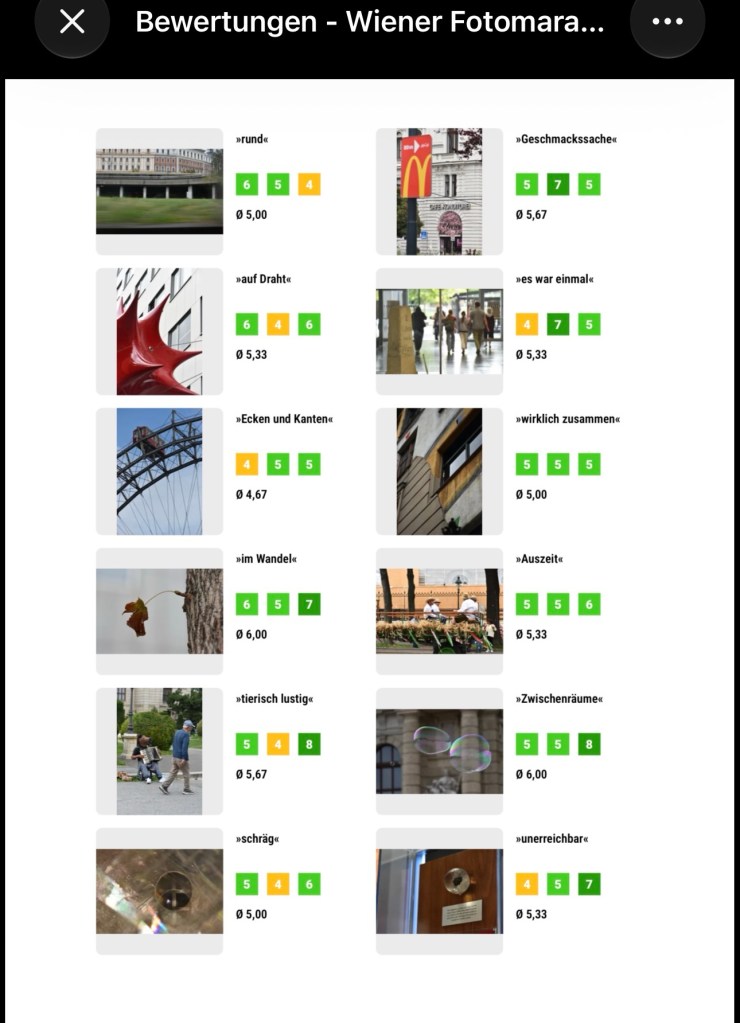
Numerical findings aside that none of my work even cleared 6.5 this time, despite some marked spreads (4 and 8 for one photo speaks more to personal preference but that is how art works), I do remark the winners are often better commercial photographs than my set, sharp, easy to read, and bright. At the same time by participating as a tourist in Vienna and limiting my role to one that discovers and interprets rather than one who constructs or even illuminates might be compromising. Still, that’s no reason not to take photos the way I always do.
Giant, otherworldly balls scattered along north Otago’s Moeraki Beach, the Boulders look as though they were handcrafted and placed by design. These massive concretions are a geological marvel. Formed originally within ancient sea-floor mud through the slow, steady crystallisation of calcite over millions of years.
(An express section of the NZ 2026 Photo Journal)
A note on these: the images are mine and sit outside this site’s CC-BY-NC terms.
What’s here is capped at 3 MP, which is plenty for a screen and no use at all on a wall. If you’d like a print, or a licence to hang one, say hello.
Last night at Liffey Toastmasters table topics I was invited to respond to the prompt, “Say if you can ask nature one question and get a definite answer, what would your question be?” Thematically, the evening gathering was titled “0th Law of Robotics” with a tint of discussion over trends in AI and thinking machines (Herbert). This is the flushed out version of my response for the record.